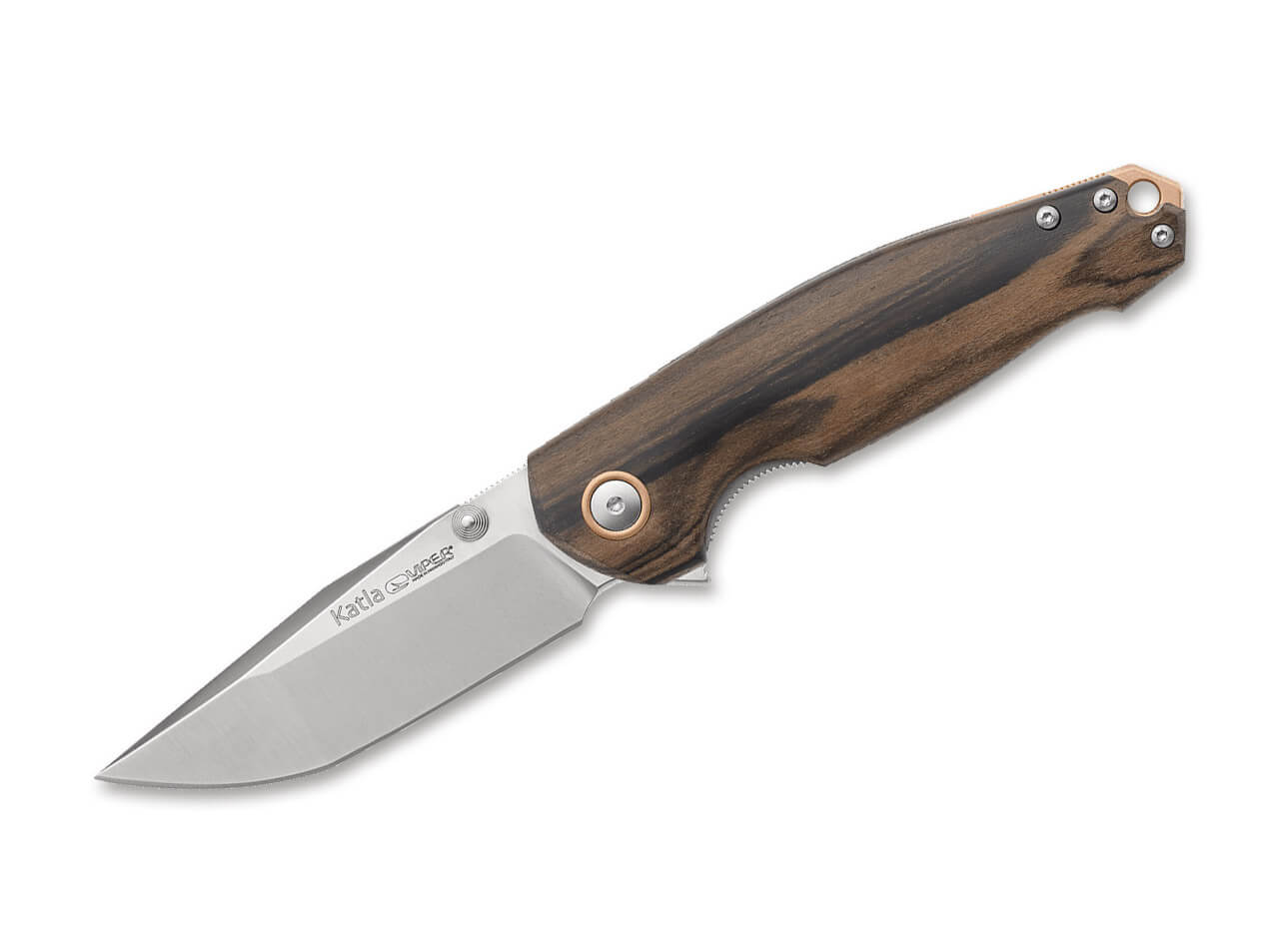
Viper Katla Wood Zircote Jesper Voxnaes design handle made of Zicote woodDropPoint blade made of M390
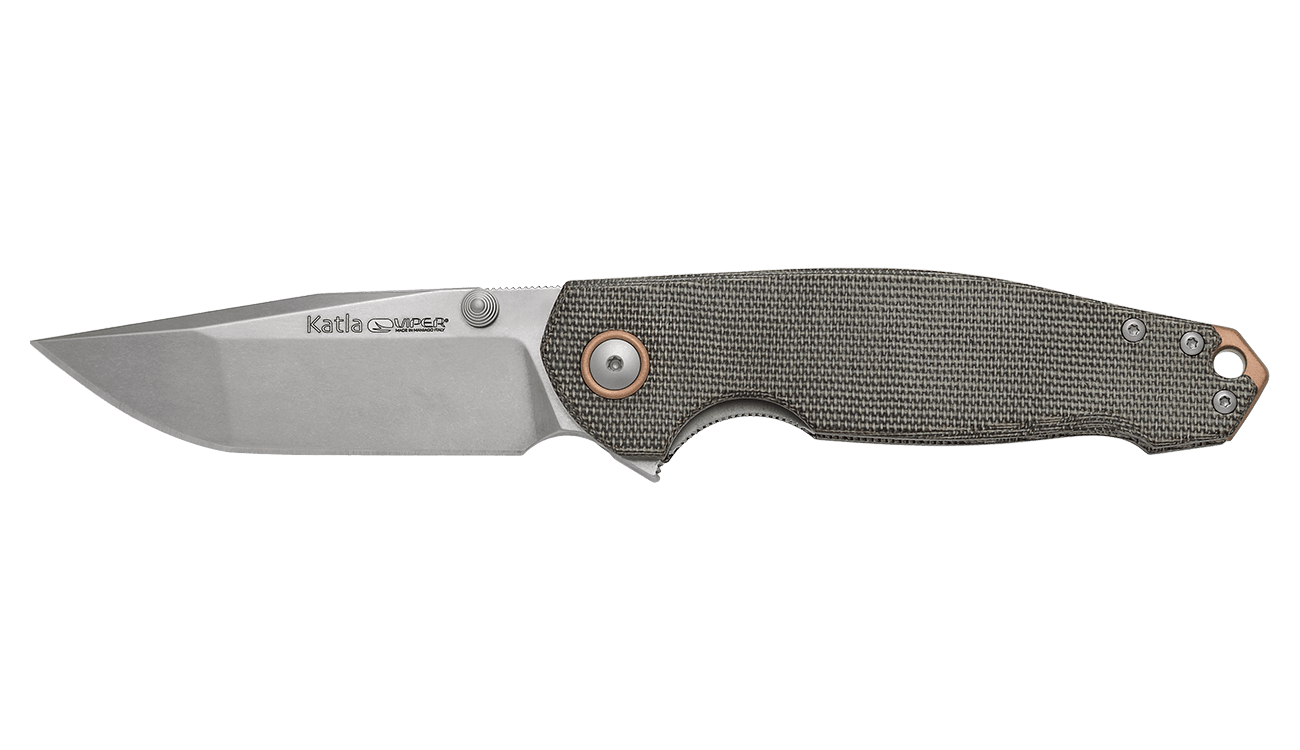
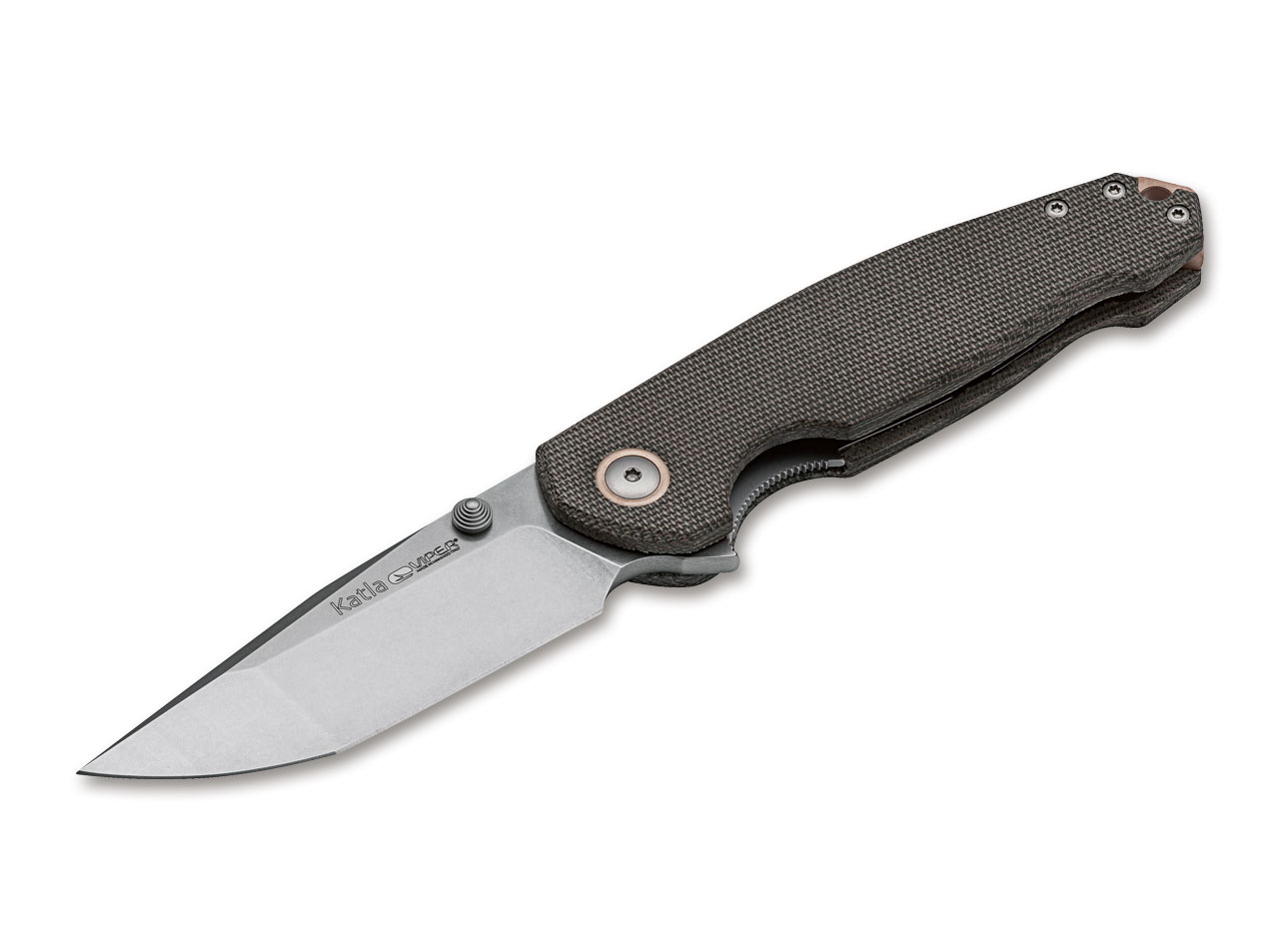
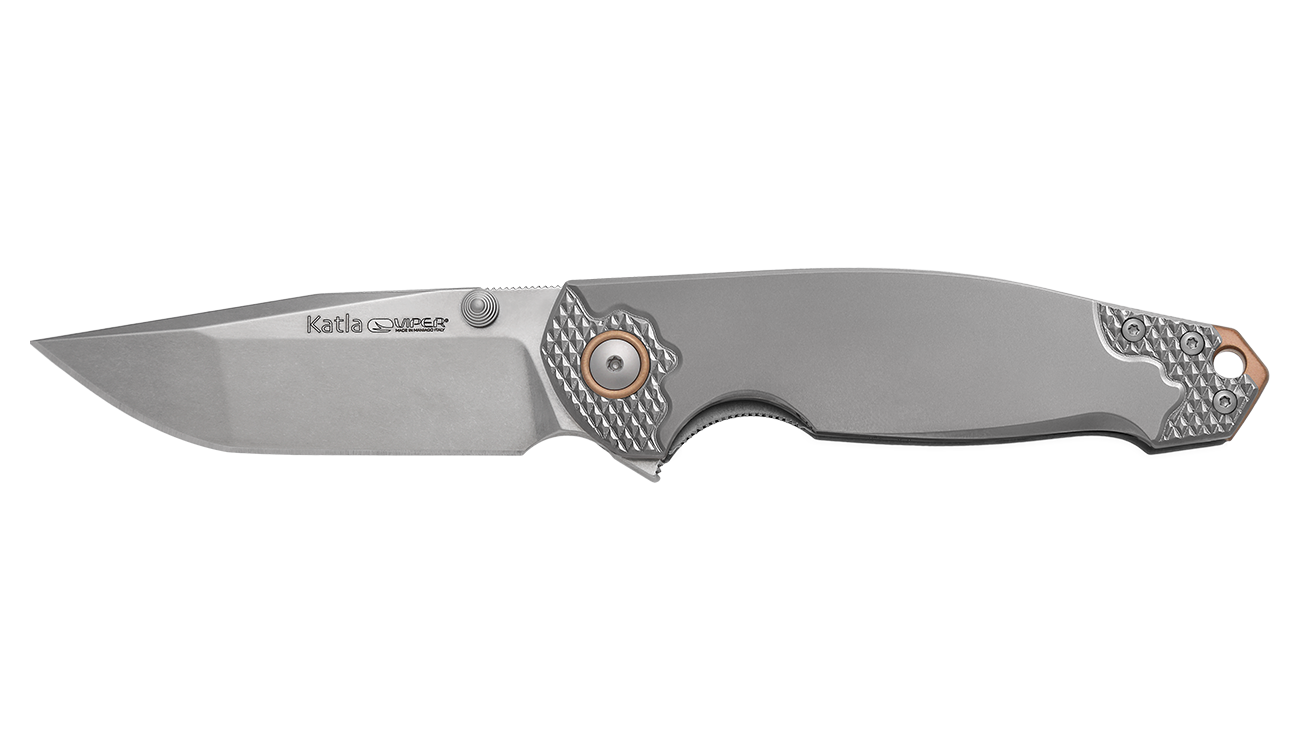
Viper Katla Canvas Micarta Green Solid EDC knife with pocket clip Jesper-Voxnaes-Design micarta handle and M390 blade Hot like a volcano The Viper Katla is not only the latest coup of Jesper Voxnaes and Viper Technocut but also the name of one of the most active volcanoes in Iceland. The design of the knife leaves no doubt: here it goes hyper-modern to the point. The handle is equipped with micarta scales, finished with a matte stonewash. Underneath the scales are steel liners, which also provide the liner lock. This locks the knife cleanly when open and can of course be easily operated with one hand. The blade, which runs on ball bearings, is opened via the small flipper tab that protrudes over the hilt or via the two thumb studs. The blade is a kind of Spanto shape, as it became world famous through the knives of Rick Hinderer. Here, the shape of a Spearpoint blade is combined with the geometry of a Tanto tip. This makes for a sweeping look, but provides uncanny stability in the front area of the blade. This means that the Katla can definitely be used to work harder. The Böhler M390 blade steel used rounds off the picture perfectly thanks to its outstanding performance.
Viper Katla Canvas Micarta Black Solid EDC knife with pocket clip Jesper-Voxnaes-Design micarta handle and M390 blade Hot like a volcano The Viper Katla is not only the latest coup of Jesper Voxnaes and Viper Technocut but also the name of one of the most active volcanoes in Iceland. The design of the knife leaves no doubt: here it goes hyper-modern to the point. The handle is equipped with micarta scales, finished with a matte stonewash. Underneath the scales are steel liners, which also provide the liner lock. This locks the knife cleanly when open and can of course be easily operated with one hand. The blade, which runs on ball bearings, is opened via the small flipper tab that protrudes over the hilt or via the two thumb studs. The blade is a kind of Spanto shape, as it became world famous through the knives of Rick Hinderer. Here, the shape of a Spearpoint blade is combined with the geometry of a Tanto tip. This makes for a sweeping look, but provides uncanny stability in the front area of the blade. This means that the Katla can definitely be used to work harder. The Böhler M390 blade steel used rounds off the picture perfectly thanks to its outstanding performance.
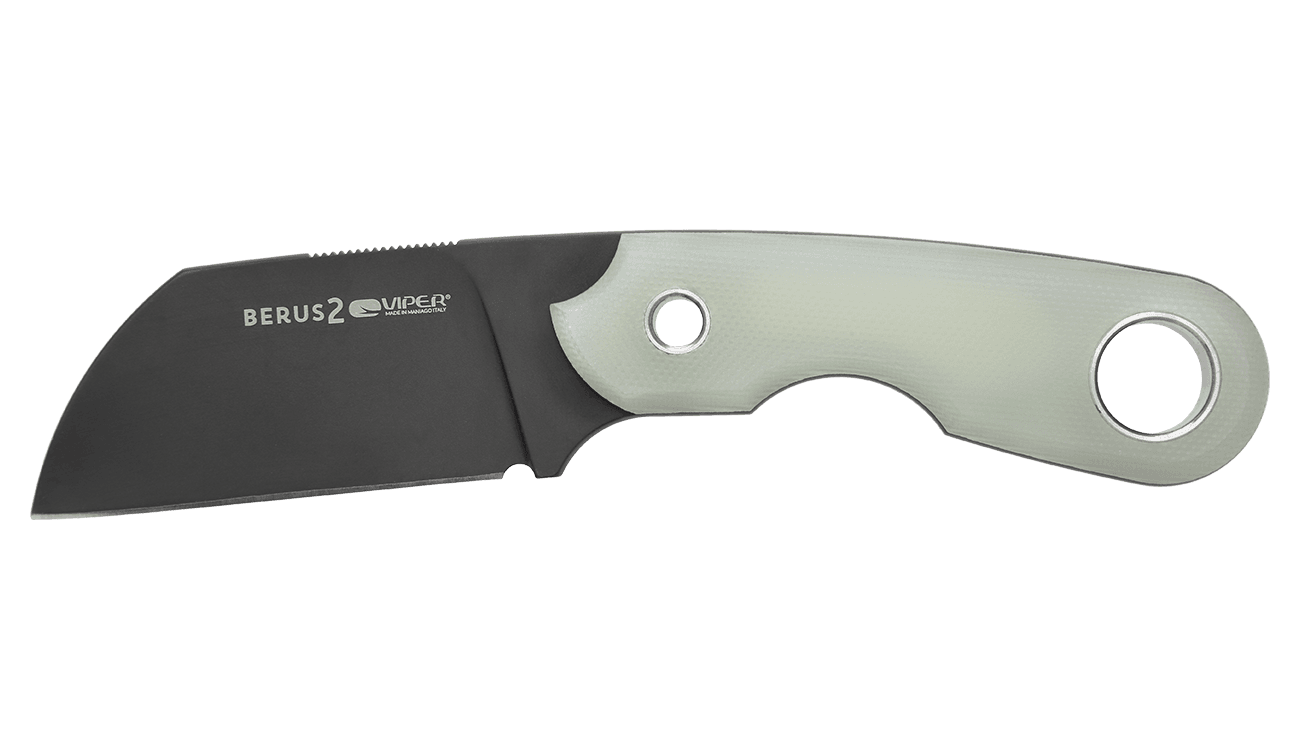
Viper Berus2 Jade G10 PVD Tommaso Rumici Design PVD blade finish Micarta handle with Kydex sheath
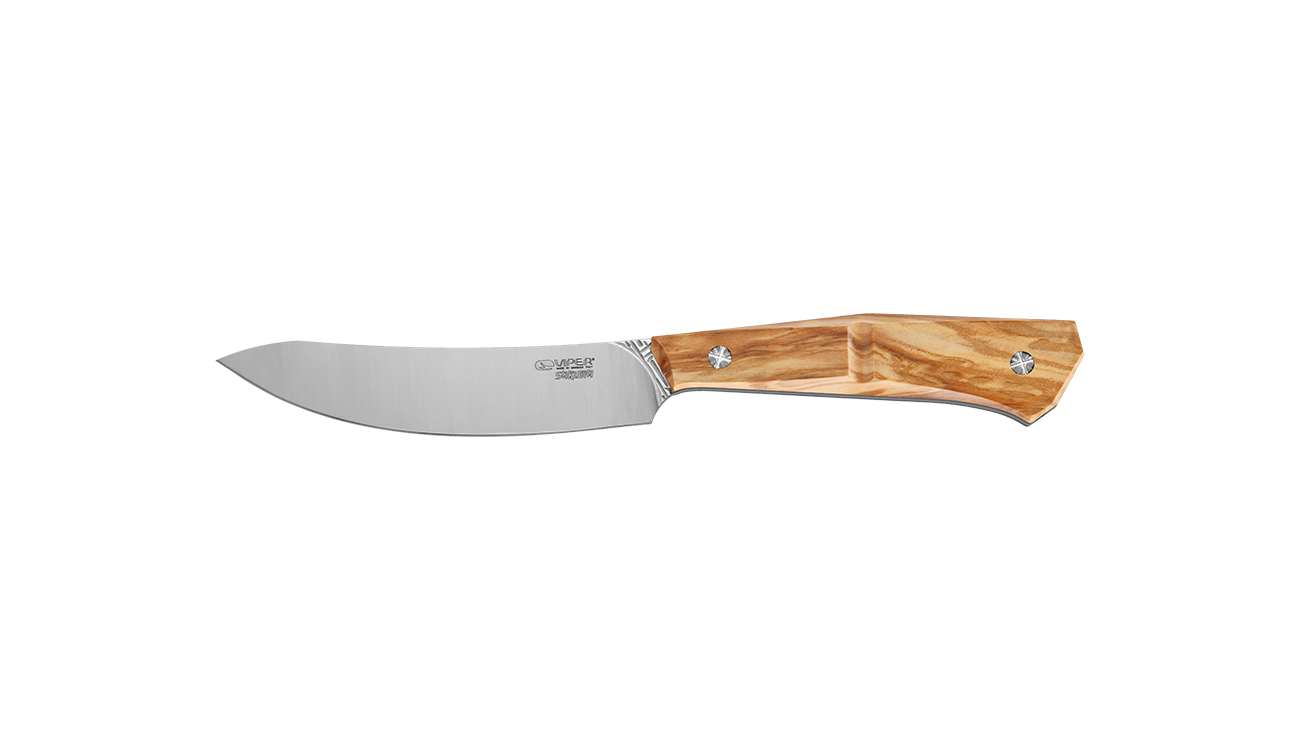
Viper Sakura steak knife olive wood Steak knife Jens Anso & Jesper Voxnaes Design Satin blade finish Wooden handle
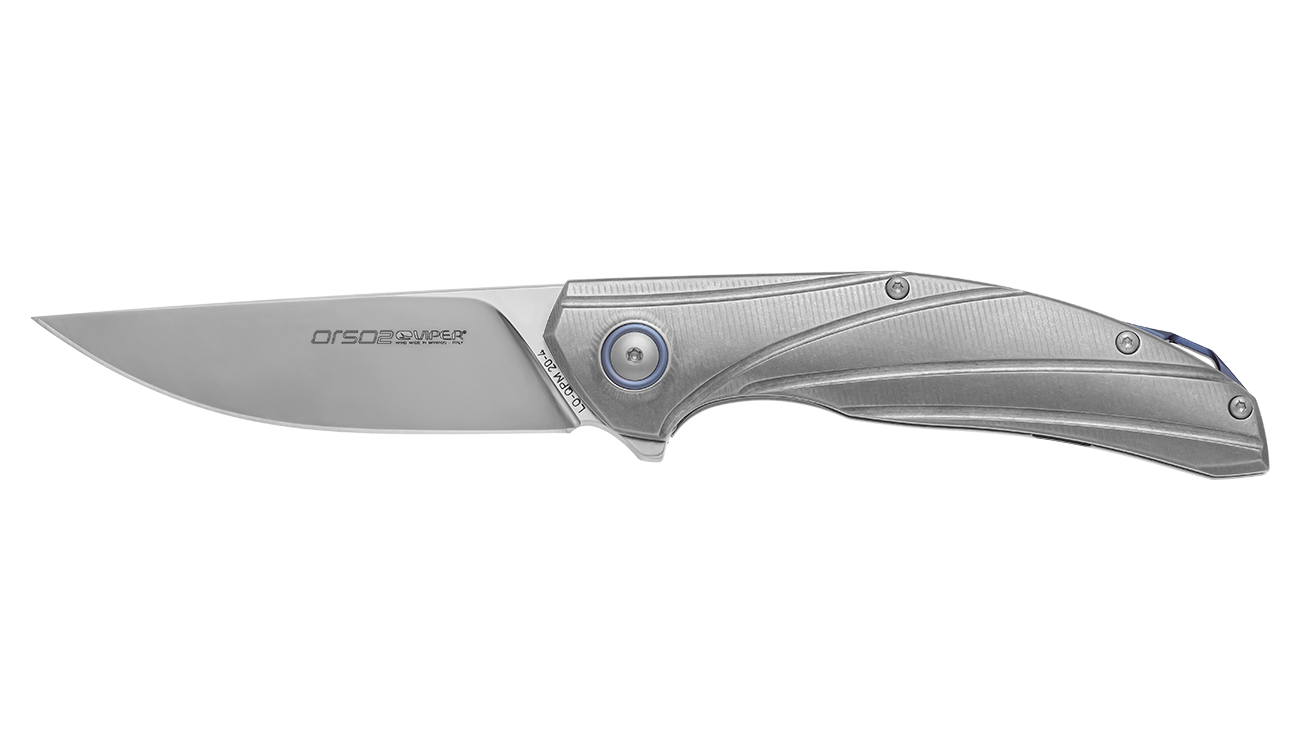
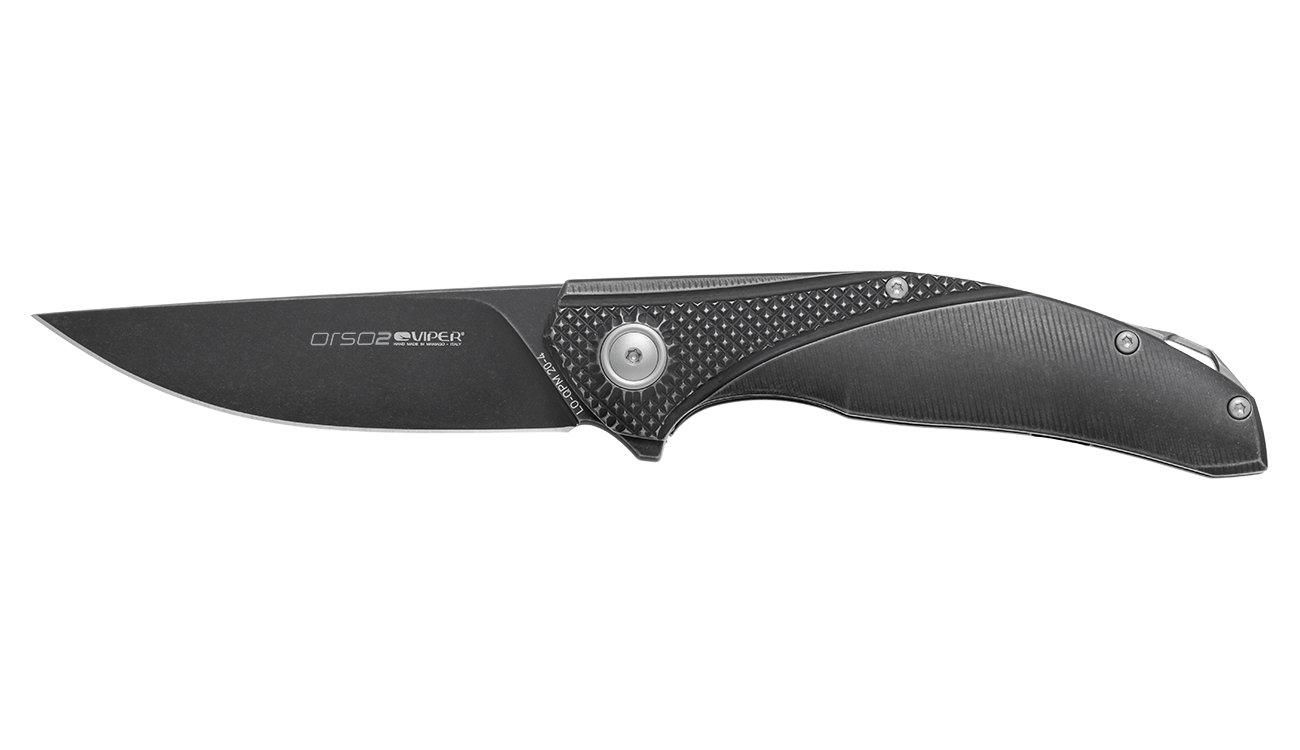
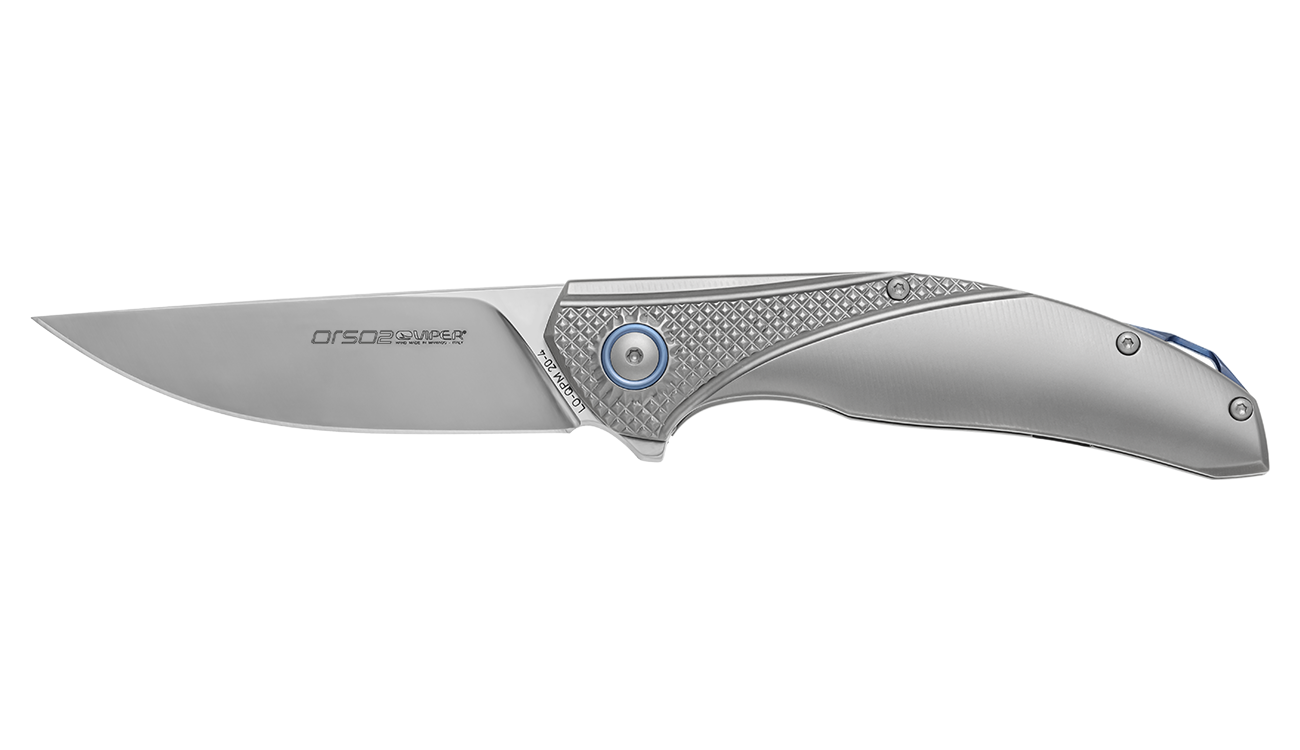
Viper Orso 2 Titanium Jens Anso Design Blade steel made of: LO-QPM20-4 (as M390 alternative) with a satin blade finish Titanium Framelock "Easy Peasy" Flipper Mechanism Clip, backspacer and ring made of blue anodized titanium Whats new? How do you make an already great knife even better? You revisit the design, change a few key areas, but don't change the basic DNA of the knife. That's exactly what Jens Anso did with the Orso 2. This version of the already great Orso design has been improved a bit in a few places. Instead of a linerlock, a framelock is now used. This is of course equipped with a combined steel insert / overtravel stop. On the one hand, this prevents wear and on the other hand, you can't accidentally overstretch the lockbar. The handle scales of the Orso 2 are of course milled from solid titanium. Thanks to the contoured edges, the knife lies very comfortably in the hand. The show side of this version is made of carbon fiber. Another innovation can be found in the steel: Viper uses the LO-QPM 20-4 steel for the first time on the Orso 2. This is an alloy produced by Lohmann in Germany that is almost identical to the popular M390 steel. Here you get a very rust resistant blade that holds sharpness for a very long time, so you can work with it for a long time without worry. Typical of Jens Anso's design is the continuous, flowing line of the knife. If you open the blade with the small flipper tab, you get a continuous line that just looks beautiful. Thanks to the built-in ball bearings, the knife also provides a lot of fun. The small details typical of Jens Anso provide a visual highlight: the 3D milled clip, the filigree backspacer, as well as the small collar around the pivot screw, round off the Orso 2 visually wonderful.
Viper Katla Stonewashed Titanium 3D Solid EDC knife with pocket clip Jesper-Voxnaes-Design titanium handle and M390 blade with 3D CNC details Hot like a volcano The Viper Katla is not only the latest coup of Jesper Voxnaes and Viper Technocut but also the name of one of the most active volcanoes in Iceland. The design of the knife leaves no doubt: here it goes hyper-modern to the point. The handle is equipped with titanium scales, finished with a stonewash. Underneath the scales are steel liners, which also provide the liner lock. This locks the knife cleanly when open and can of course be easily operated with one hand. The blade, which runs on ball bearings, is opened via the small flipper tab that protrudes over the hilt or via the two thumb studs. The blade is a kind of Spanto shape, as it became world famous through the knives of Rick Hinderer. Here, the shape of a Spearpoint blade is combined with the geometry of a Tanto tip. This makes for a sweeping look, but provides uncanny stability in the front area of the blade. This means that the Katla can definitely be used to work harder. The Böhler M390 blade steel used rounds off the picture perfectly thanks to its outstanding performance.
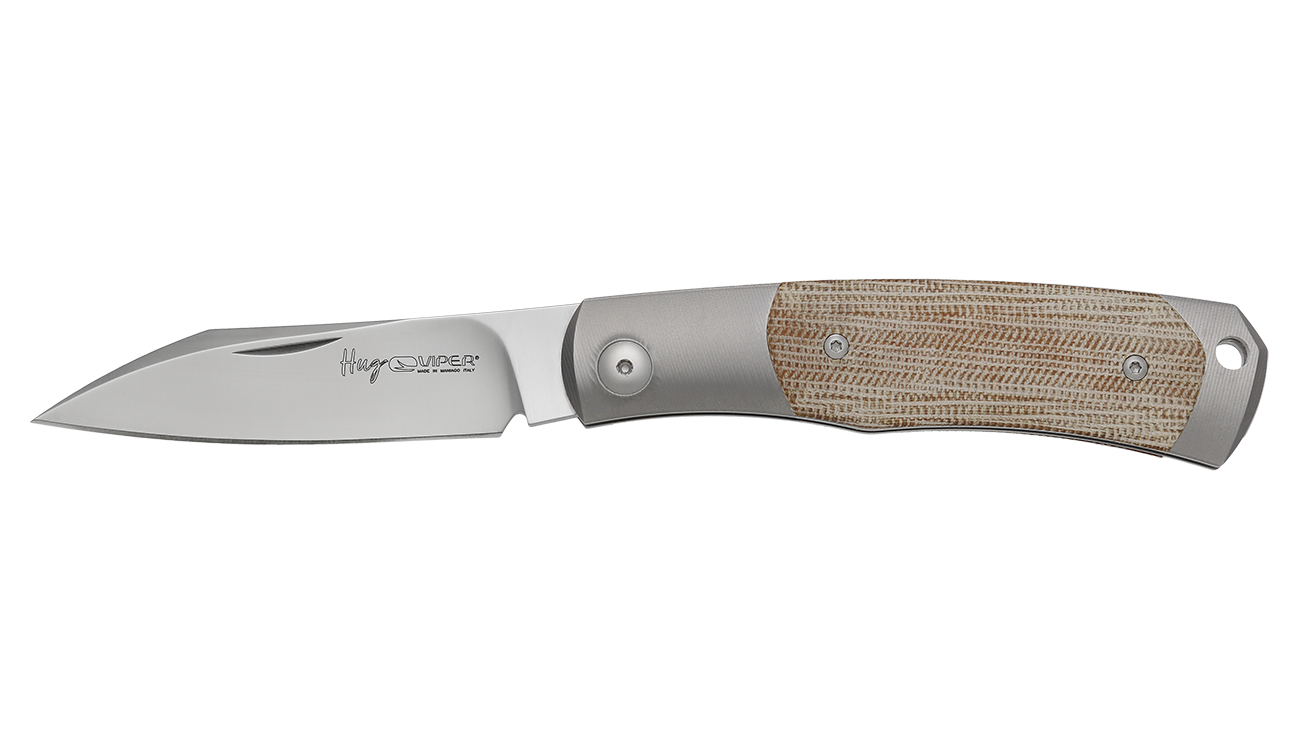
Viper Hug2 Natural Micarta Sacha Thiel Design Satin blade finish Titanium liner Handle: Micarta
Viper Orso2 Dark Stonewashed Titan 3D Jens Anso Design LO-QPM20-4 blade Dark Stonewashed blade finish 3D Dark Stonewashed Titanium Handle Whats new? How do you make an already great knife even better? You revisit the design, change a few key areas, but don't change the basic DNA of the knife. That's exactly what Jens Anso did with the Orso 2. This version of the already great Orso design has been improved a bit in a few places. Instead of a linerlock, a framelock is now used. This is of course equipped with a combined steel insert / overtravel stop. On the one hand, this prevents wear and on the other hand, you can't accidentally overstretch the lockbar. The handle scales of the Orso 2 are of course milled from solid titanium. Thanks to the contoured edges, the knife lies very comfortably in the hand. Another innovation can be found in the steel: Viper uses the LO-QPM 20-4 steel for the first time on the Orso 2. This is an alloy produced by Lohmann in Germany that is almost identical to the popular M390 steel. Here you get a very rust resistant blade that holds sharpness for a very long time, so you can work with it for a long time without worry. Typical of Jens Anso's design is the continuous, flowing line of the knife. If you open the blade with the small flipper tab, you get a continuous line that just looks beautiful. Thanks to the built-in ball bearings, the knife also provides a lot of fun. The small details typical of Jens Anso provide a visual highlight: the 3D milled clip, the filigree backspacer, as well as the small collar around the pivot screw, round off the Orso 2 visually wonderful.
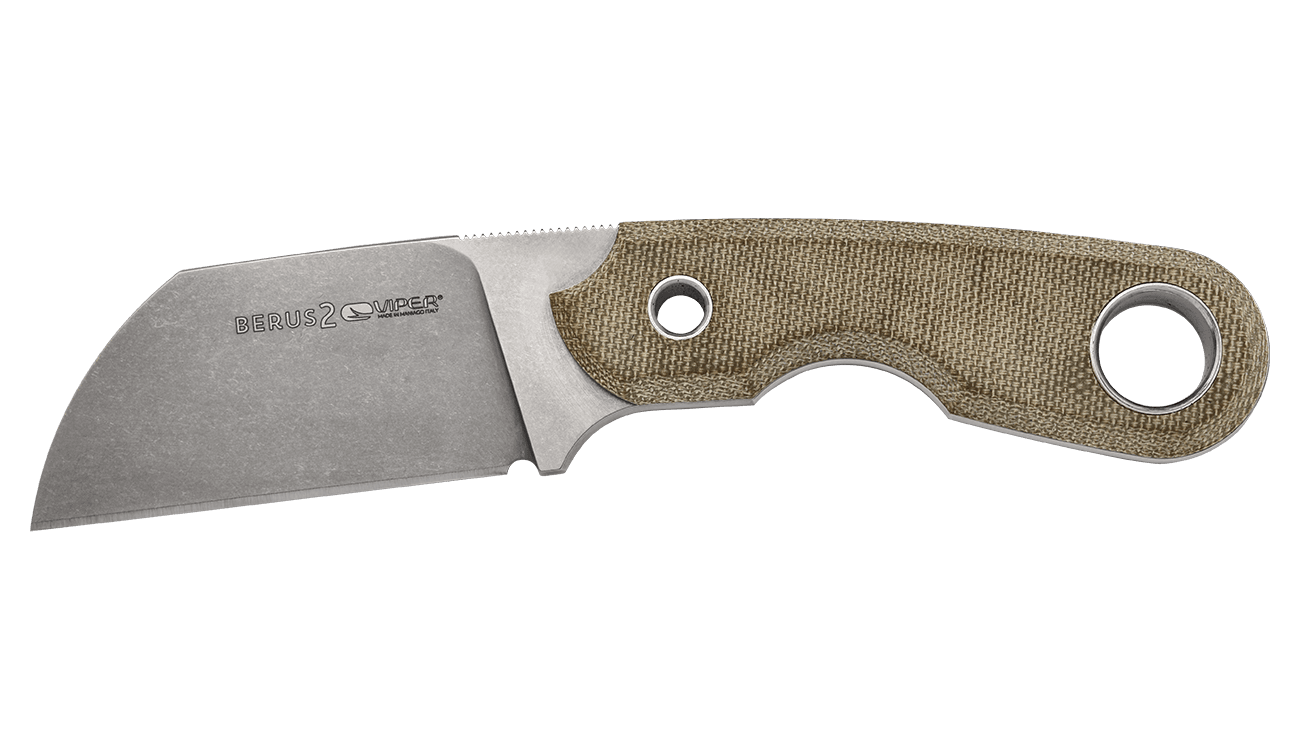
Viper Berus2 Green Micarta Tommaso Rumici Design Stonewashed blade finish Micarta handle with Kydex sheath
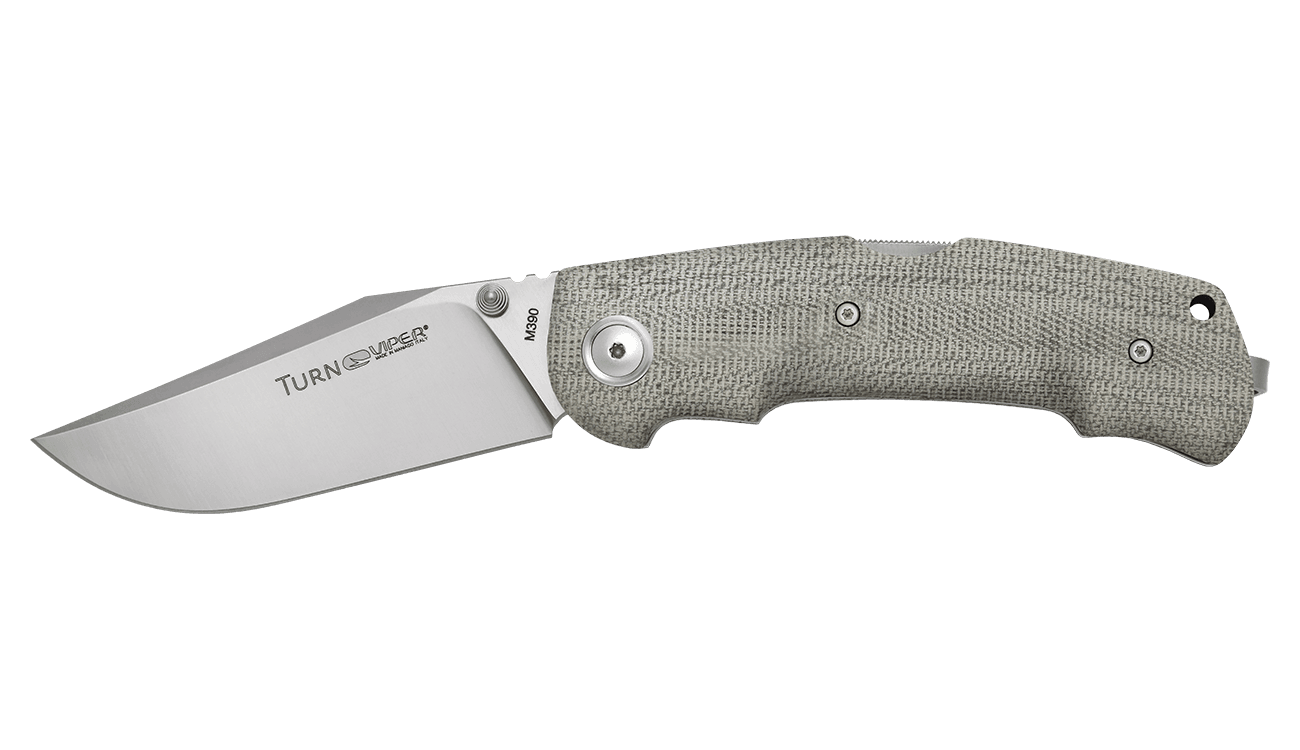
Viper Turn Essential Green Micarta Fabrizio Silvestrelli Satin blade finish Handle: Micarta
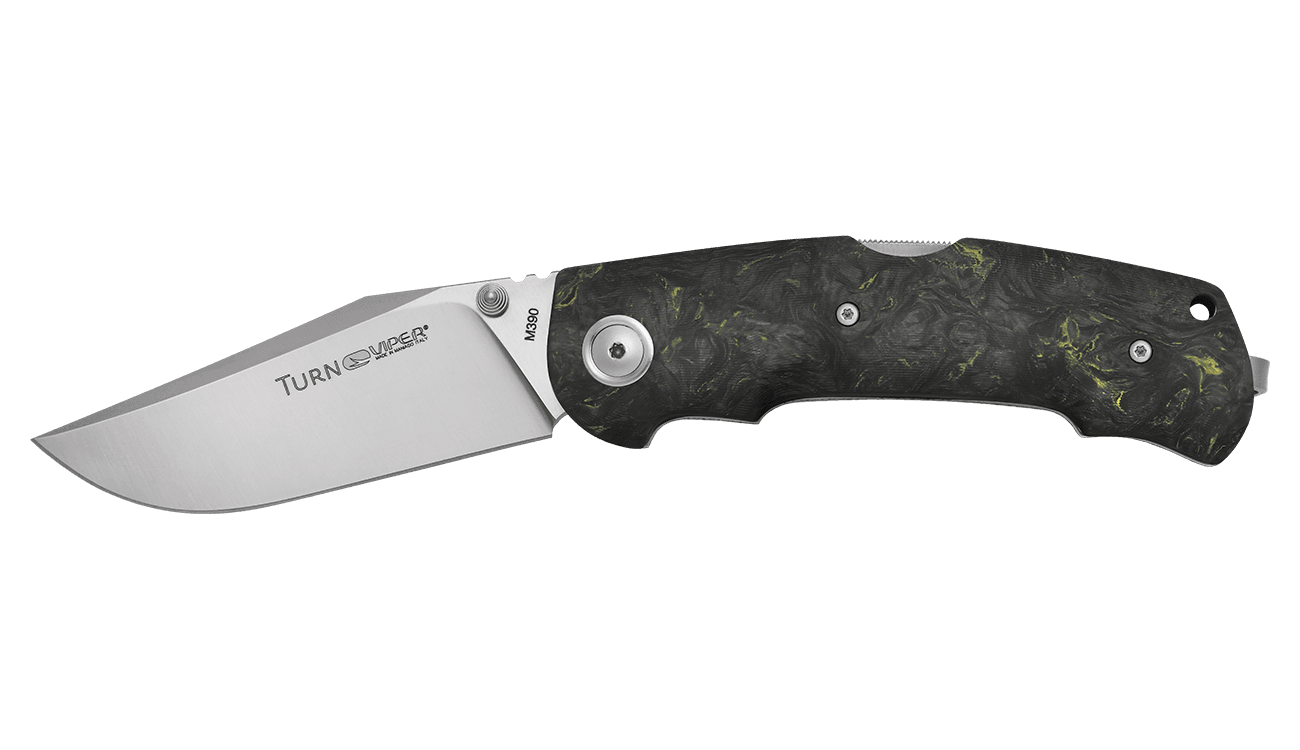
Viper Turn Essential Dark Matter Yellow Carbon Fiber Fabrizio Silvestrelli Satin blade finish Handle: carbon fiber
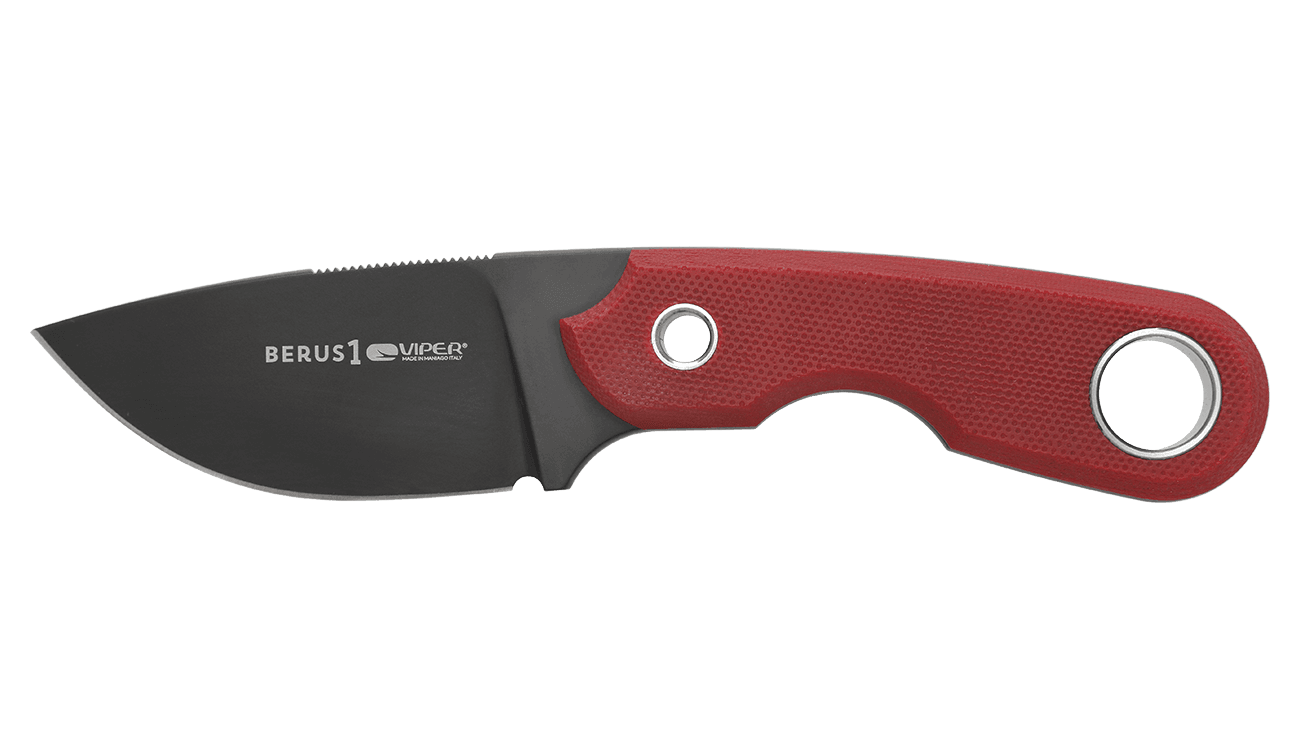
Viper Berus1 Red G10 PVD Tommaso Rumici Design "Pockets Fixed" with Micarta handle scales with Kydex sheath and Ulti Clip M390
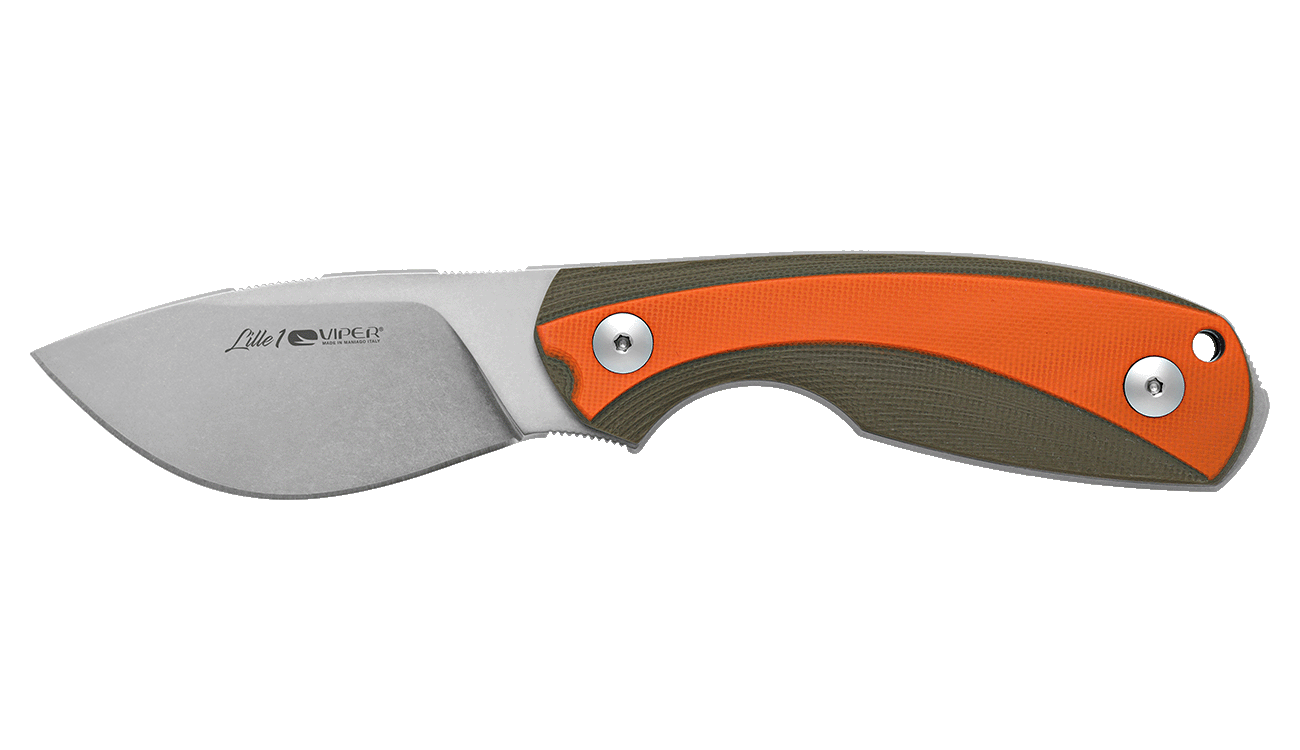
Viper Lille1 G10 Green / Orange Jesper Voxnaes design Small pocket fixed Elmax steel Stonewashed blade finish Kydex sheath with UltiClip included
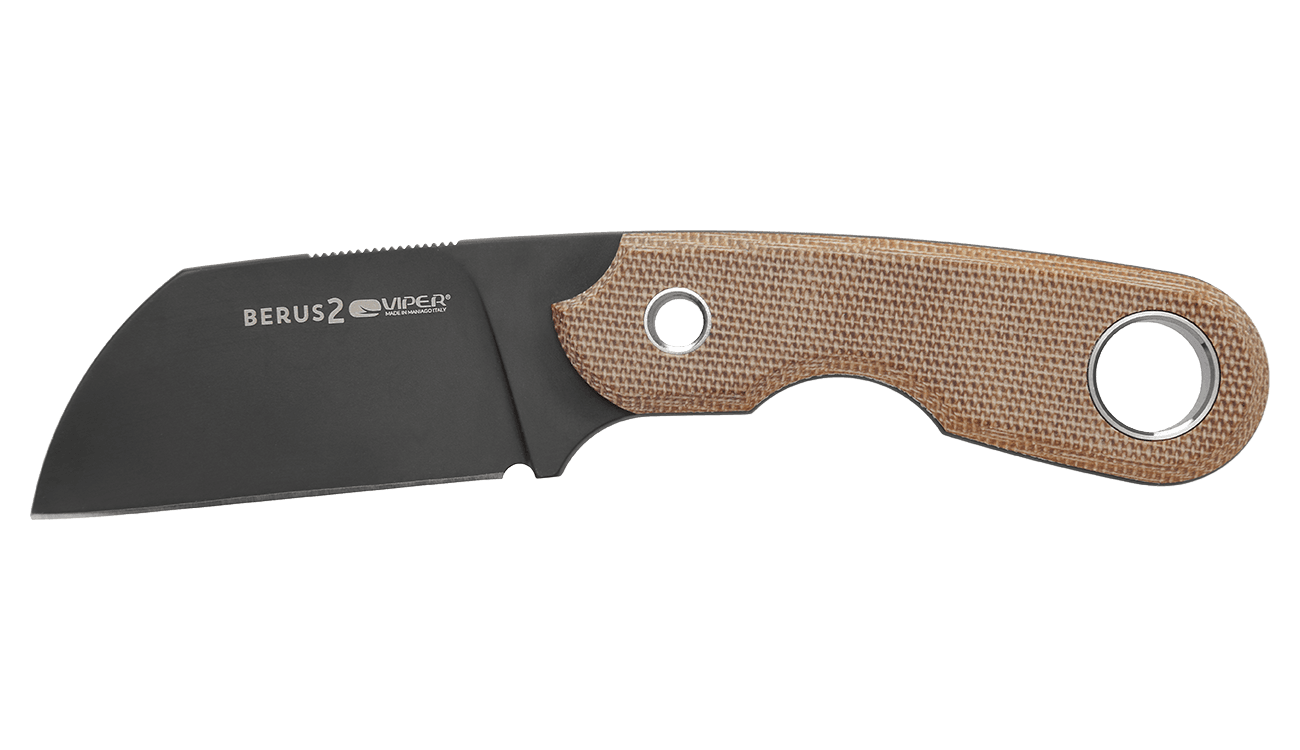
Viper Berus2 Natural Micarta PVD Tommaso Rumici Design PVD blade finish Micarta handle with Kydex sheath
Viper Berus2 Red G10 PVD Tommaso Rumici Design PVD blade finish Micarta handle with Kydex sheath
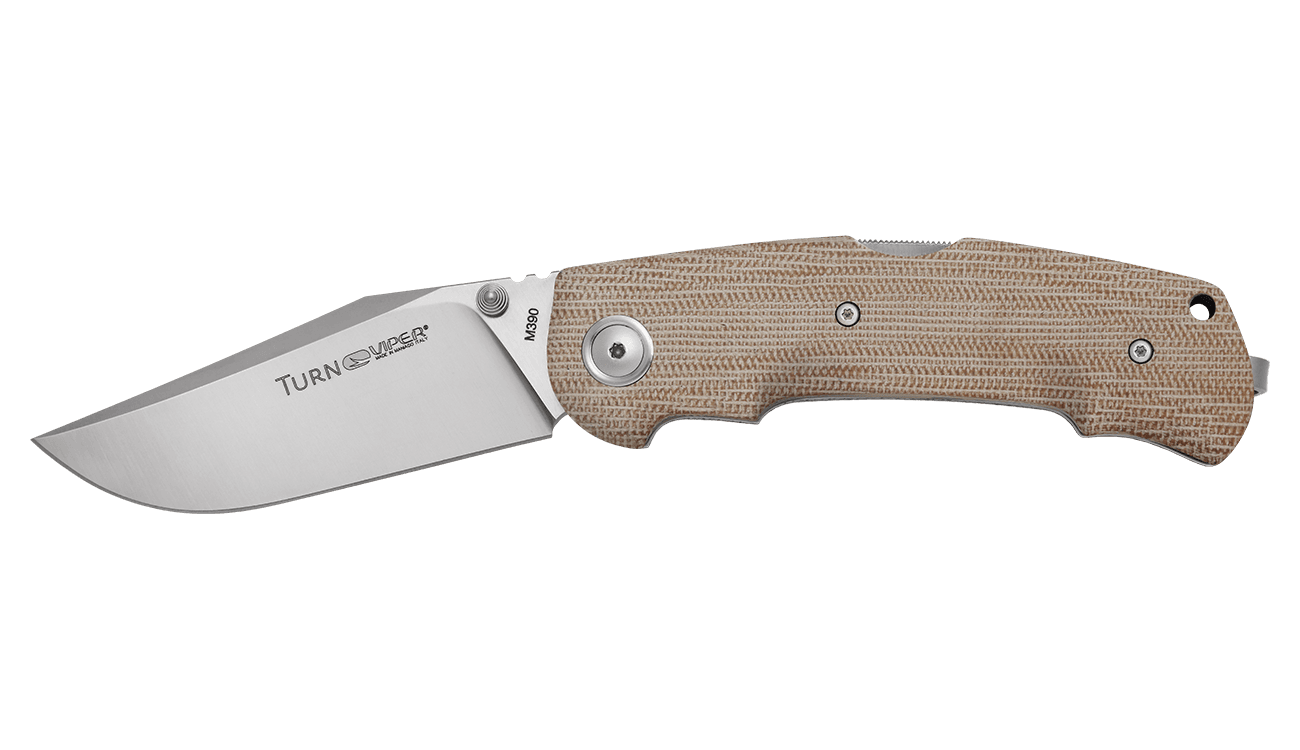
Viper Turn Essential Natural Micarta Fabrizio Silvestrelli Satin blade finish Handle: Micarta
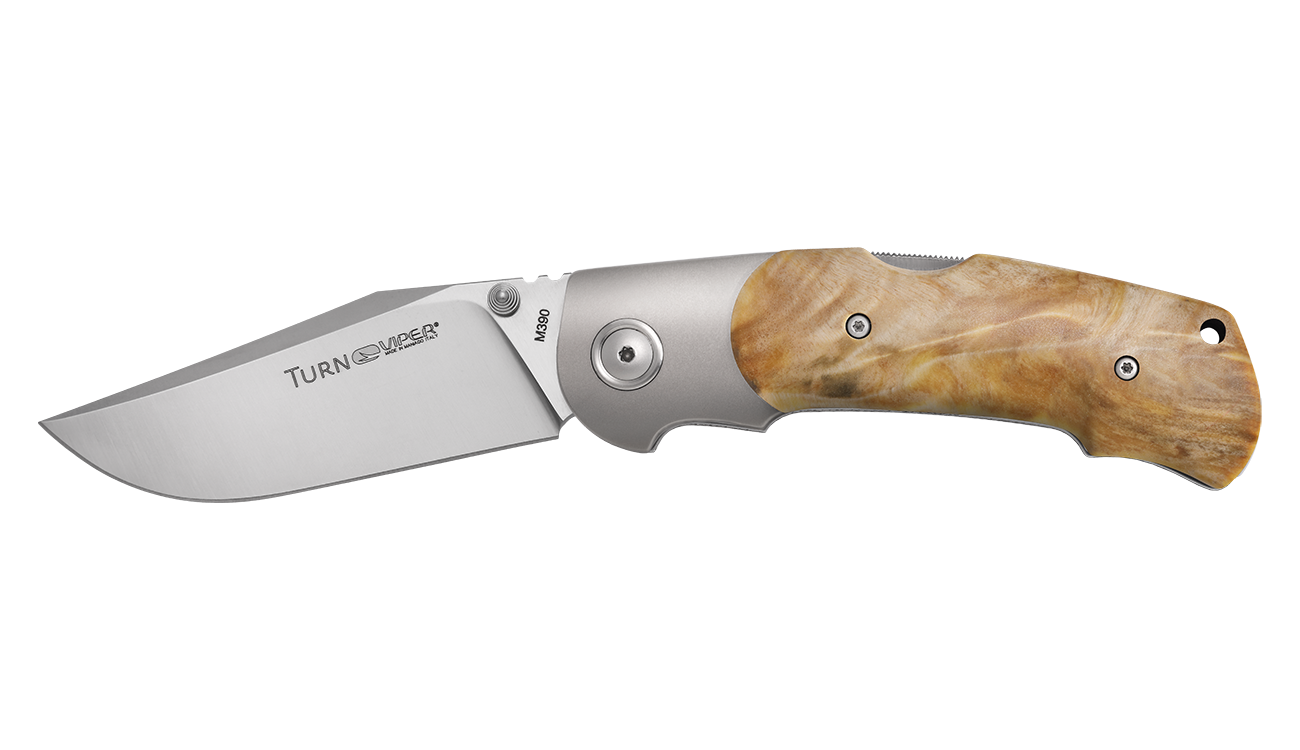
Viper Turn poplar wood Fabrizio Silvestrelli Satin blade finish Titanium inlays and satin bolsters Handle: flamed wood
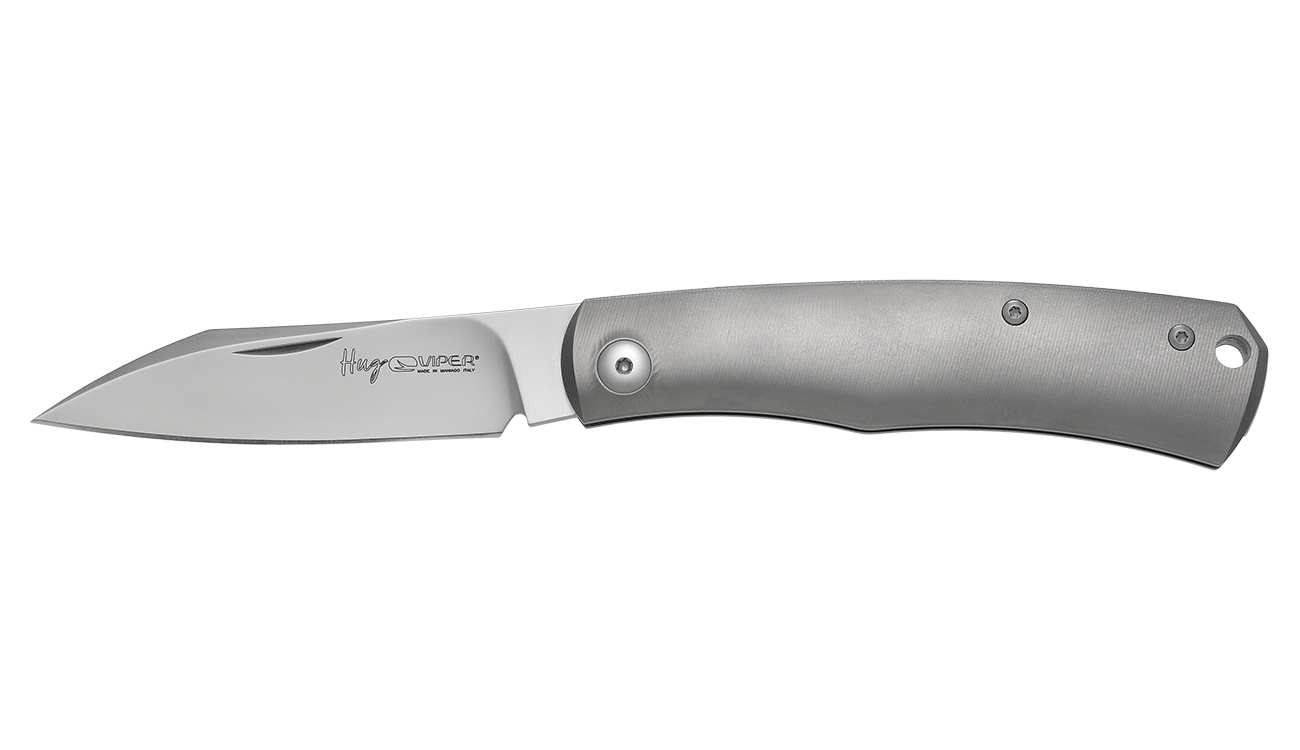
Viper Hug Titanium Sacha Thiel Design Satin blade finish Handle: Sandblasted Titanium
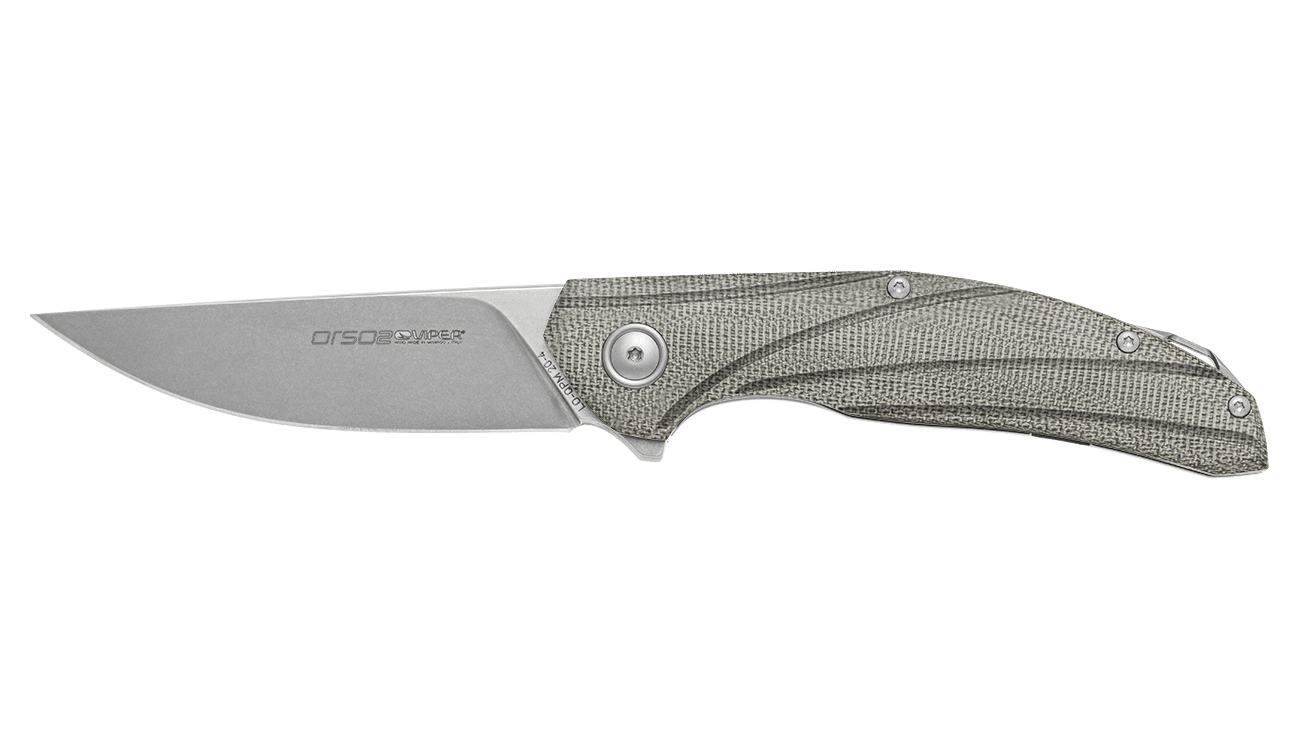
Viper Orso2 Green Micarta Jens Anso Design LO-QPM20-4 blade Stonewashed blade finish Micarta handle Whats new? How do you make an already great knife even better? You revisit the design, change a few key areas, but don't change the basic DNA of the knife. That's exactly what Jens Anso did with the Orso 2. This version of the already great Orso design has been improved a bit in a few places. Instead of a linerlock, a framelock is now used. This is of course equipped with a combined steel insert / overtravel stop. On the one hand, this prevents wear and on the other hand, you can't accidentally overstretch the lockbar. The handle scales of the Orso 2 are of course milled from solid titanium. Thanks to the contoured edges, the knife lies very comfortably in the hand. The show side of this version is made of green micarta Another innovation can be found in the steel: Viper uses the LO-QPM 20-4 steel for the first time on the Orso 2. This is an alloy produced by Lohmann in Germany that is almost identical to the popular M390 steel. Here you get a very rust resistant blade that holds sharpness for a very long time, so you can work with it for a long time without worry. Typical of Jens Anso's design is the continuous, flowing line of the knife. If you open the blade with the small flipper tab, you get a continuous line that just looks beautiful. Thanks to the built-in ball bearings, the knife also provides a lot of fun. The small details typical of Jens Anso provide a visual highlight: the 3D milled clip, the filigree backspacer, as well as the small collar around the pivot screw, round off the Orso 2 visually wonderful.
Viper Orso2 Titan 3D Jens Anso Design LO-QPM20-4 blade Satin blade finish Sandblasted Titan handle Whats new? How do you make an already great knife even better? You revisit the design, change a few key areas, but don't change the basic DNA of the knife. That's exactly what Jens Anso did with the Orso 2. This version of the already great Orso design has been improved a bit in a few places. Instead of a linerlock, a framelock is now used. This is of course equipped with a combined steel insert / overtravel stop. On the one hand, this prevents wear and on the other hand, you can't accidentally overstretch the lockbar. The handle scales of the Orso 2 are of course milled from solid titanium. Thanks to the contoured edges, the knife lies very comfortably in the hand. Another innovation can be found in the steel: Viper uses the LO-QPM 20-4 steel for the first time on the Orso 2. This is an alloy produced by Lohmann in Germany that is almost identical to the popular M390 steel. Here you get a very rust resistant blade that holds sharpness for a very long time, so you can work with it for a long time without worry. Typical of Jens Anso's design is the continuous, flowing line of the knife. If you open the blade with the small flipper tab, you get a continuous line that just looks beautiful. Thanks to the built-in ball bearings, the knife also provides a lot of fun. The small details typical of Jens Anso provide a visual highlight: the 3D milled clip, the filigree backspacer, as well as the small collar around the pivot screw, round off the Orso 2 visually wonderful.
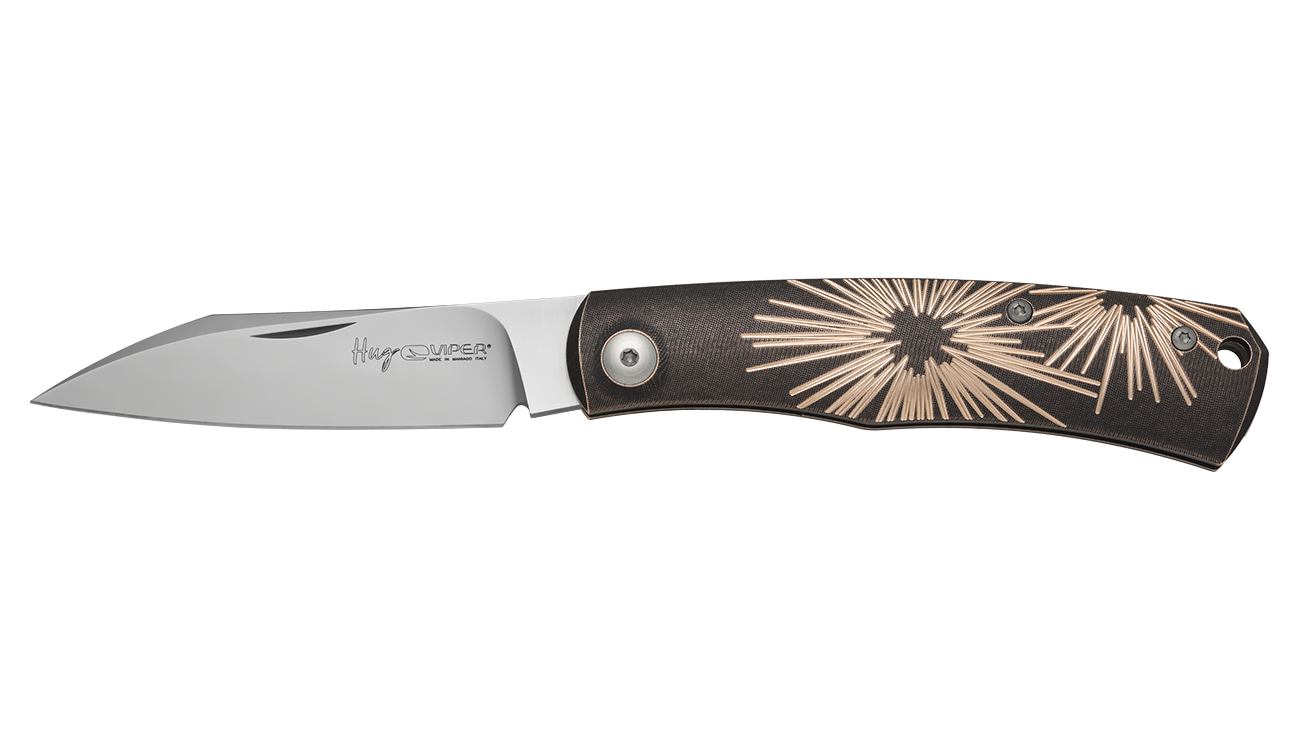
Viper Hug Dark Bronze Stella Sacha Thiel Design M390 steel with satin blade finish Handle: Stonewahed dark bronze Stella CNC milled Slipjoint with leather sheath
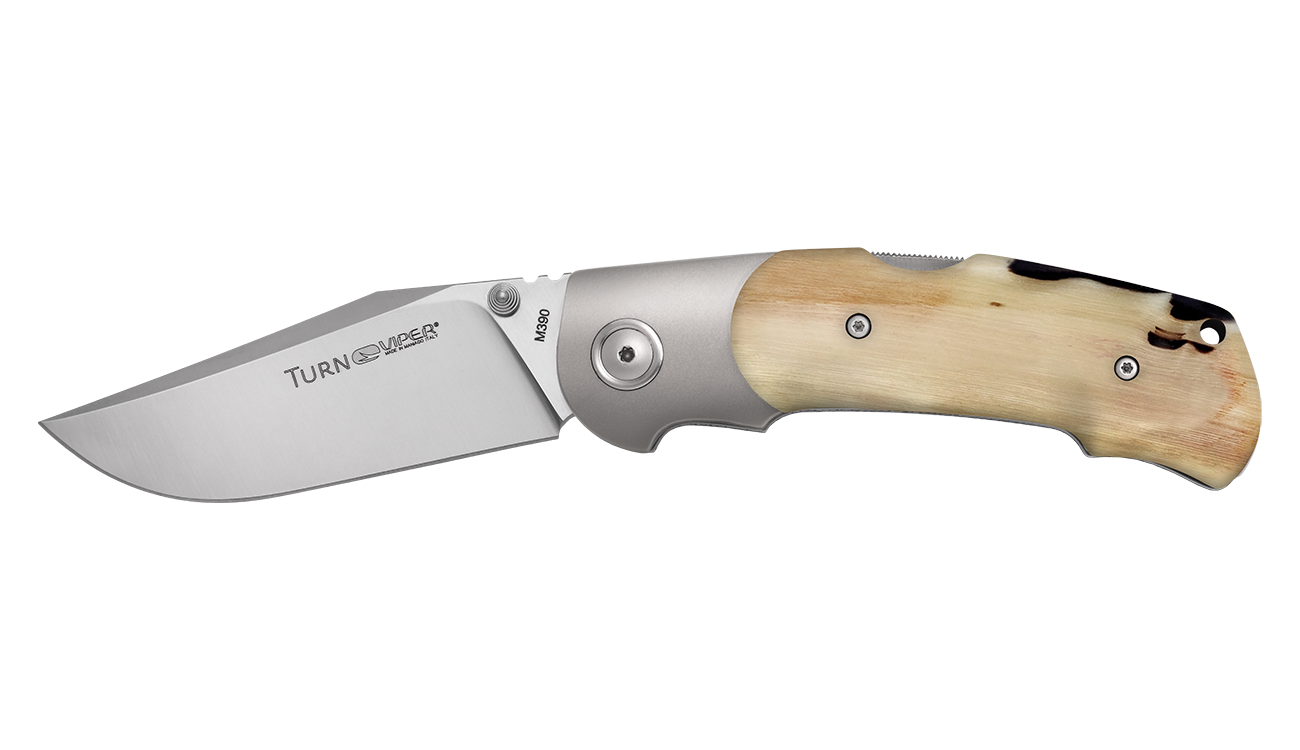
Viper Turn Ram Horn Fabrizio Silvestrelli Satin blade finish Titanium inlays and satin bolsters Handle: Horn
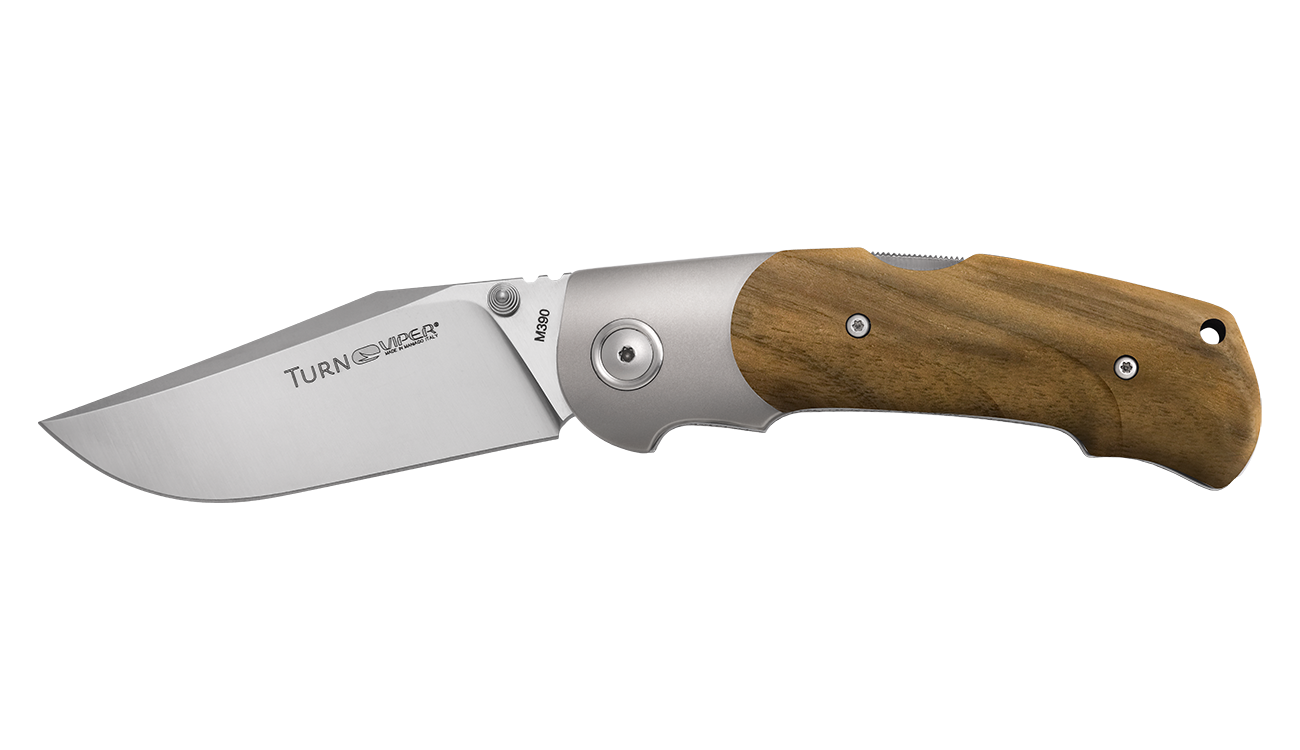
Viper Turn Walnut Fabrizio Silvestrelli Design Satin blade finish Titanium inserts and satin bolsters Handle: Titanium bolster und Wood