Spyderco Knives: Everything You Need to Know (Models, Legality & Buying Guide)
Spyderco is one of the most recognized knife manufacturers in the world, and for good reason. Whether you're looking for your first quality pocket knife or want to grow your collection, this guide covers the brand, what makes it distinctive, and which models are legal to carry in Germany. We ship all Spyderco knives from our warehouse in Hamburg and are happy to help if you have questions about which model to choose or about German knife law.
What Is a Spyderco Knife?
Spyderco is an American knife manufacturer based in Golden, Colorado, known for the round hole in the blade (the Spyderhole) and thoughtful, everyday-carry-focused design. The brand was founded in 1976 by Sal and Gail Glesser. What began as a small booth at trade shows has grown into one of the most influential brands in the knife industry. Today the company is run by son Eric Glesser in its second generation, with the same passion for innovation as on day one.

Spyderco stands for thoughtful design, premium steels, and functionality that actually holds up in daily use. The knives are popular among collectors, outdoor enthusiasts, tradespeople, and anyone looking for a dependable EDC (Everyday Carry) knife.
Where Are Spyderco Knives Made?
Spyderco manufactures at several locations worldwide: mainly in Golden, Colorado, USA, and also in Japan, Italy, Taiwan, and China, depending on the model. The place of manufacture is stamped on every blade and varies by design, some models benefit from the precision of Japanese production, others from the long knife-making tradition of workshops in Maniago, northern Italy, while Taiwan and China are typically used for more accessibly priced lines.

For collectors, the place of manufacture usually matters less than whether a model is a so-called Sprint Run. These are strictly limited releases of existing models, often featuring rarer steels, unusual handle materials, or colors, produced once and rarely repeated once sold out. Sprint Runs can come from any production country, USA, Japan, Italy, Taiwan, or China makes little difference to collector value, it's the limited nature of the release itself that drives demand.
Why Spyderco Stands Out on Steel and Cutting Performance
Few manufacturers experiment with new steels as consistently as Spyderco. The brand is among the first to put newly developed steel alloys into production knives, often before other makers even consider them. The lineup ranges from proven classics like VG-10 to high-performance steels like CPM S110V or Maxamet.
Steel selection is only part of the story, heat treatment matters just as much. Spyderco is known for pulling the full potential out of every steel through especially careful heat treating, meaning maximum edge retention alongside solid toughness. A steel is only as good as its heat treatment, and that's exactly where Spyderco has built its reputation over decades. The brand goes a step further too: together with steelmaker Crucible, Spyderco developed CPM SPY27, its own exclusive knife steel, cobalt-enriched and tailored specifically to Spyderco blade designs.
Most models also feature Spyderco's signature full-flat grind. Occasionally, though, Spyderco opts for a hollow grind instead, depending on what suits the particular blade geometry and intended use best. A thinly ground blade cuts noticeably more effortlessly, something you'll notice on every cut, whether opening packages or handling detail work.
Designed for the Hand, Not the Eye
Spyderco has its own phrase for its design philosophy: "designed in the dark." The idea is that ergonomics and function come first during development, looks come second. A handle has to feel right before it needs to look good. That's also why some Spyderco models look unusual at first glance while feeling remarkably well thought out in hand. This commitment to putting function before form is one of the reasons Spyderco knives are so highly regarded by heavy users and collectors alike.
Spyderco Invented the Pocket Clip
In 1981, Spyderco became the first manufacturer to add a pocket clip to a folding knife. It's standard today, but at the time it was a small revolution. The clip lets you carry the knife securely and within easy reach in your pocket, without it slipping or getting lost. This innovation shaped the entire everyday carry culture that followed.
Why Do Spyderco Knives Have a Hole in the Blade, and Are They One-Hand Knives?
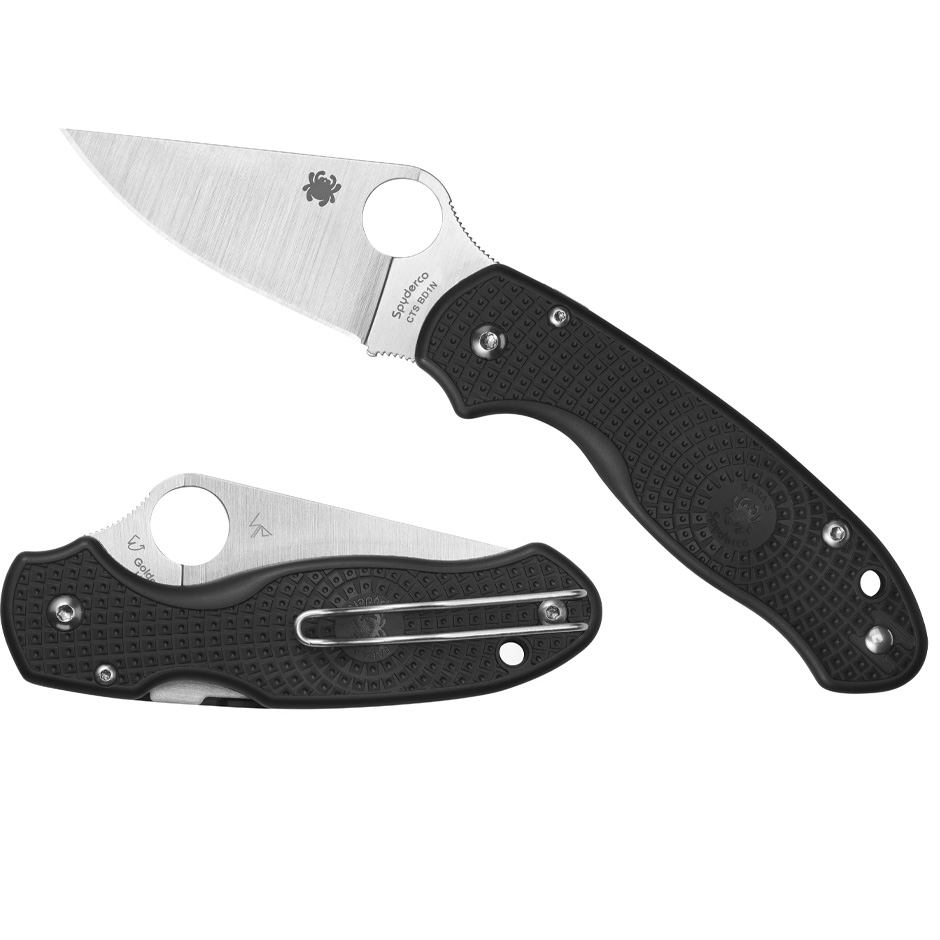
The round hole in the blade is called the Spyderhole and lets you open the knife with a single finger, one of Spyderco's most defining inventions and the brand's most recognizable feature. When Spyderco introduced the Spyderhole, nothing like it existed on the market: folding knives up to that point were opened using a small nail nick, usually with both hands. Sal Glesser wanted a knife that could be opened reliably with one hand, and rather than adapting an existing solution, he designed an entirely new component from scratch. The Spyderhole is widely regarded as the starting point for the modern one-hand-opening knife category as we know it today, and many other manufacturers have since adopted the principle in their own designs.

This technically makes Spyderco knives one-hand-opening knives, meaning knives that can be opened with a single hand. That's an important legal distinction in Germany, which we'll cover next.
Are Spyderco Knives Legal in Germany? (§42a WaffG)
Owning a Spyderco knife is always legal in Germany. Whether you can carry it in public depends on the model: locking one-hand knives face restrictions, non-locking slipjoint models are allowed. This is the question we get asked most often, and it's a fair one.
In Germany, §42a of the Weapons Act (Waffengesetz, or WaffG) regulates which knives may be carried in public. Simplified, the rules are:
- One-hand-opening knives with a lock or catch may not be carried in public. That means a folding knife that opens with one hand and then locks in place (for example via a liner lock, frame lock, or Compression Lock) is prohibited from being carried.
- One-hand-opening knives without a lock, known as slipjoints, are legal to carry. The blade opens but does not lock in place.
- Two-hand knives, meaning knives that require both hands to open, are also legal to carry.
- Fixed-blade knives are legal to carry as long as the blade doesn't exceed 12 cm (about 4.7 inches).
- Exceptions apply for professional use or certain recreational activities, such as fishing or camping.
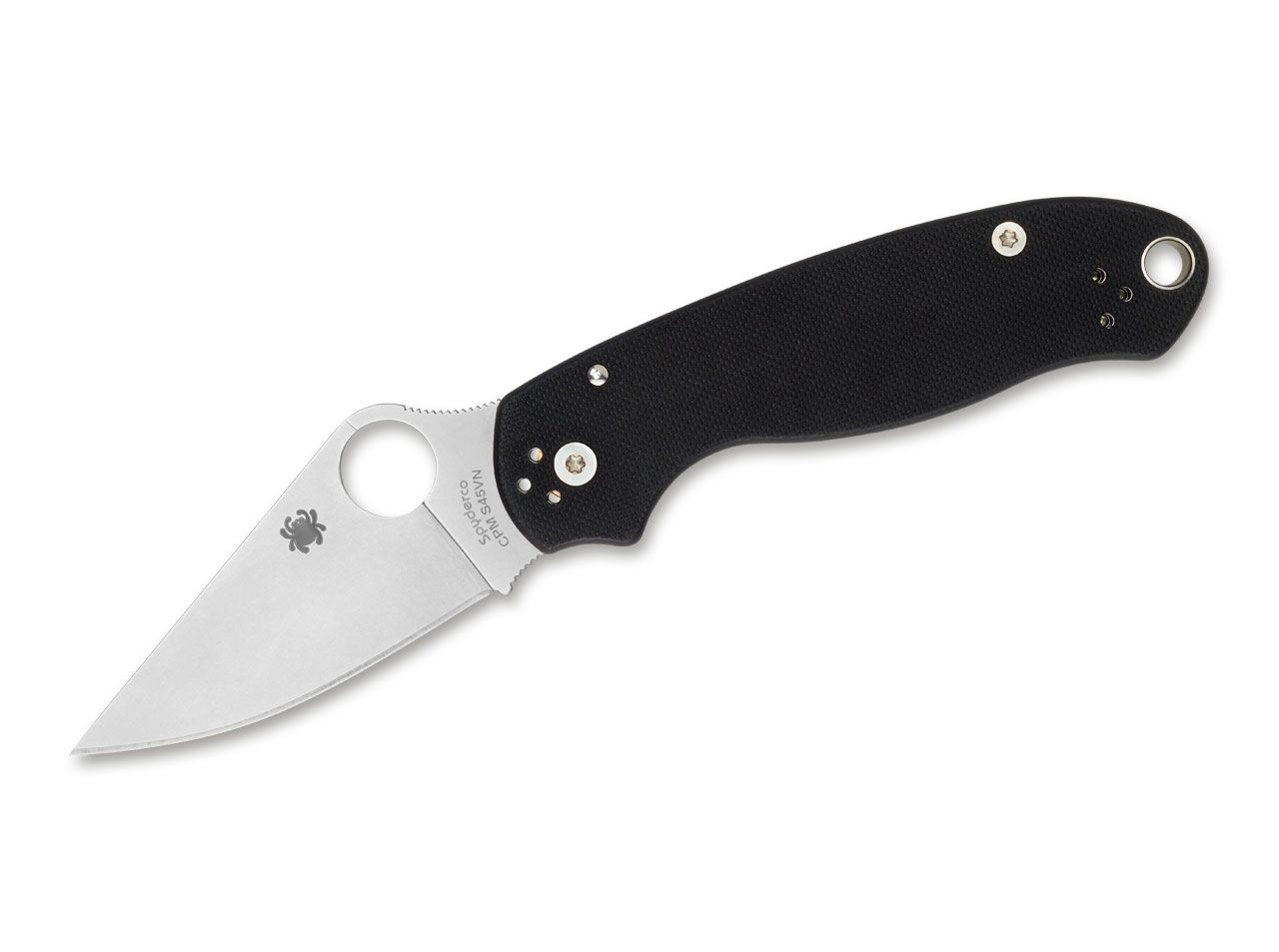
For Spyderco, that means: models with a Spyderhole and a lock (like the PM2 or Para 3) can be purchased and collected, but not carried in public. Spyderco slipjoints and fixed-blade Spyderco knives under 12 cm, on the other hand, are fully legal to carry.
Important: ownership is always legal in Germany. Carrying it, meaning having it on you in public, is the point that matters. For more detail, see our info article What Does §42a-Compliant Mean? A Simple Explanation of Germany's Knife Carry Law.
One important note upfront: not every Spyderco knife is automatically legal in Germany. Spyderco also produces balisongs (butterfly knives) and automatic knives, which are largely prohibited or heavily restricted here. Every Spyderco knife we carry at Knife Lounge is legal in Germany, either to own or to fully carry in public.
Which Spyderco Models Are §42a-Compliant and Legal to Carry in Germany?
Spyderco has developed a whole range of slipjoint models specifically for the European market that don't lock when opened one-handed, and are therefore legal to carry in Germany: the UK Penknife (UKPK), Lil Native Slipjoint, NAND, Squeak, and Metropolitan Lightweight. Add to that the three mini slipjoints, Bug, Honeybee, and Grasshopper, tiny keychain knives built on the same principle. Some fixed-blade Spyderco knives under 12 cm are also §42a-compliant.

Spyderco UK Penknife (UKPK), the Bestseller in Germany
The Spyderco UK Penknife, commonly abbreviated UKPK and sometimes written UK Pen Knife, is by far the best-selling Spyderco model in Germany and for many people their first Spyderco knife. Depending on handle material and steel, it runs around 100 euros. It was originally designed for the British and European market and meets local requirements here too: no one-hand locking mechanism, no catch.
The UKPK comes in several versions, with different handle materials and steels, combining classic Spyderco quality with legally compliant design. We aim to keep it in stock at all times, as demand stays consistently high. Since we ship from Hamburg, you'll typically have it within 1 to 2 business days within Germany.
See all §42a-compliant Spyderco knives in our shop
Tip for enthusiasts: want to customize your UKPK? We carry exclusive Cross-Cut titanium scales from Daily Customs Hamburg, available only at Knife Lounge.

Spyderco Lil Native Slipjoint
The Lil Native is basically the smaller sibling of the popular Native, just without the lock. You still get the same well-thought-out blade shape and the same finger choil as the larger original, just compact enough that it barely registers in your pocket. If you like the Native design but want something you can carry without restriction in Germany, the Lil Native is the natural choice.
Spyderco NAND, the Most Unusual Slipjoint in the Lineup
The NAND comes from Paul Alexander, a mechanical engineer with a doctorate and a knife designer, and it opens unlike any other Spyderco knife: the blade's tang protrudes from the closed handle and flips open one-handed like a classic straight razor. A double-detent mechanism holds the blade securely open, with no locking mechanism at all. That makes the NAND legal to carry in Germany as well. A titanium handle, M398 steel, and a reversible wire clip make it one of the most premium, and most unusual, slipjoints in Spyderco's current lineup.
See the Spyderco NAND in our shop
Spyderco Metropolitan Lightweight
Simple, elegant, and urban, the Metropolitan Lightweight is built for the city. The handle is featherlight FRN, while the blade is made from Böhler M398 powder steel, a high-end steel with exceptional edge retention. The understated design means the knife practically disappears in daily carry, despite the premium build.
See the Spyderco Metropolitan Lightweight in our shop
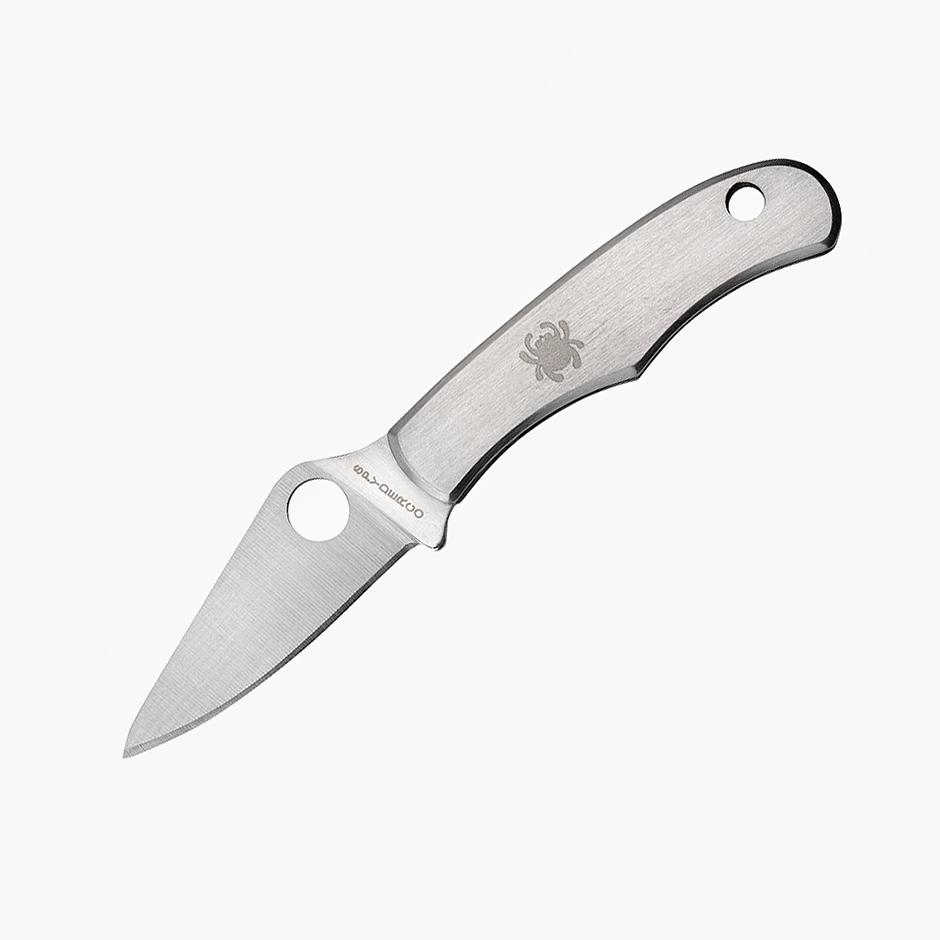
Spyderco Bug, Honeybee, and Grasshopper, the Mini Slipjoints for Your Keychain
Bug, Honeybee, and Grasshopper are the three smallest slipjoints in Spyderco's lineup, built on the same principle as the UK Penknife, just in miniature. At just a few grams, they're more keychain companion than full-sized everyday knife, which is exactly why so many people carry one as a constant, unobtrusive backup. All three are §42a-compliant.
See the Spyderco Honeybee in our shop · See the Spyderco Grasshopper in our shop
Spyderco PITS 2 Titanium Slipit
The PITS 2 is a high-end slipjoint machined from solid titanium, designed by British knifemaker Mike Read and manufactured in Italy. Instead of a traditional