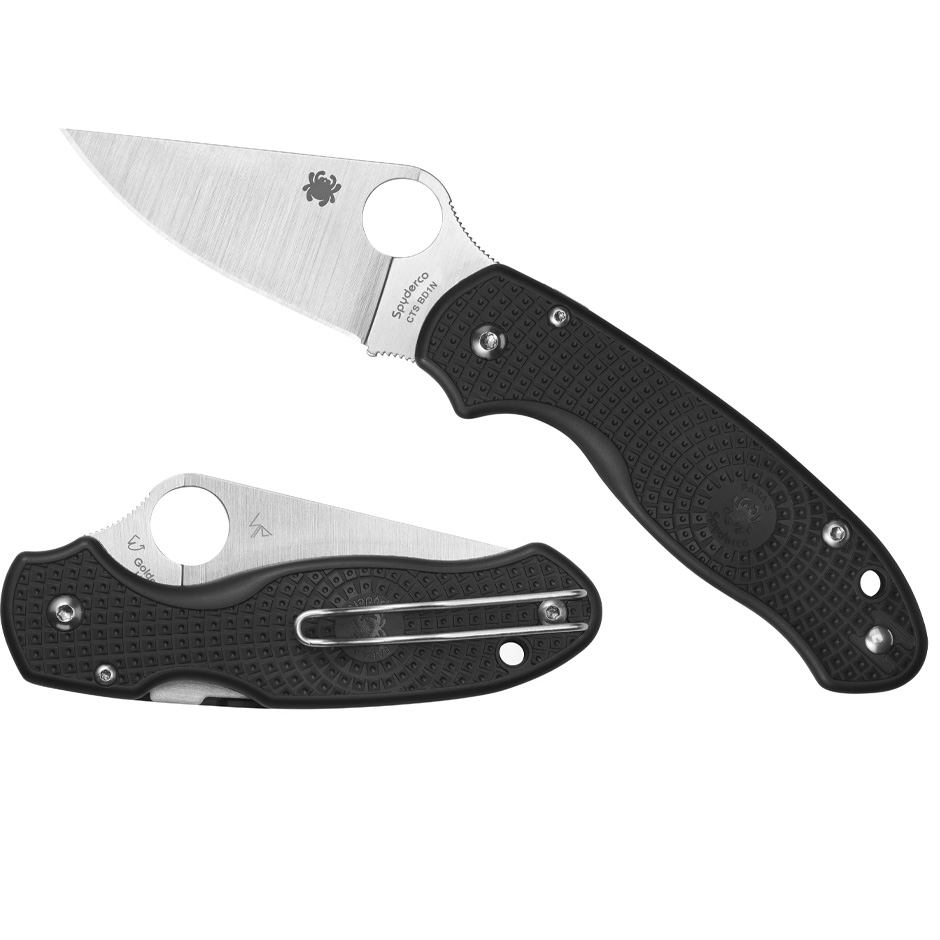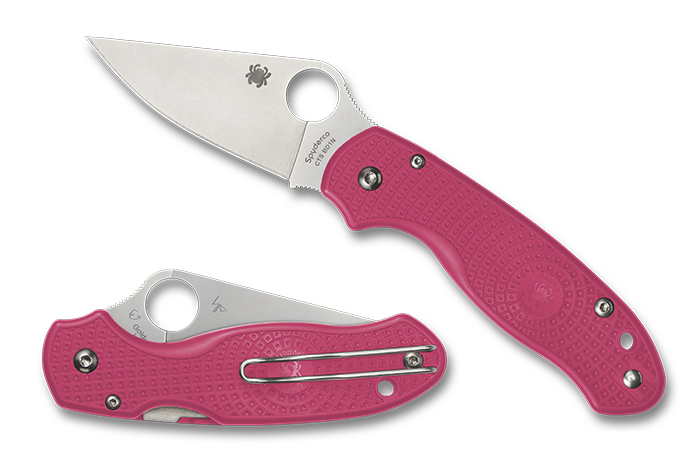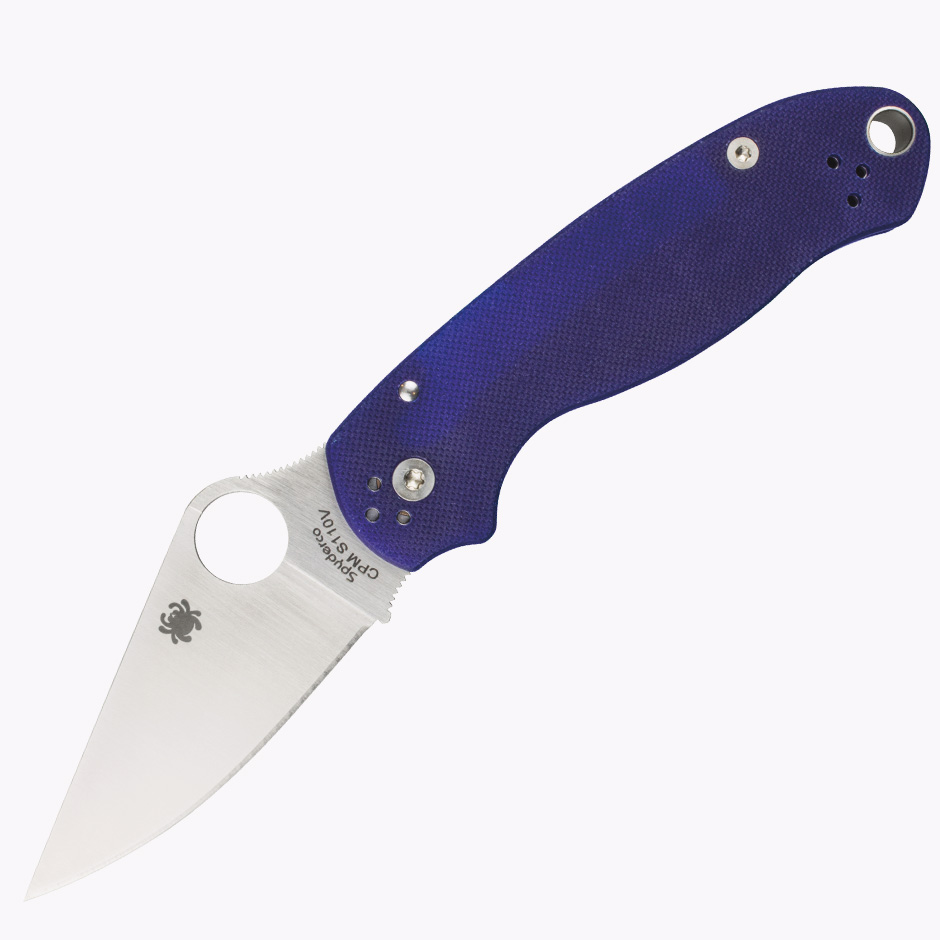


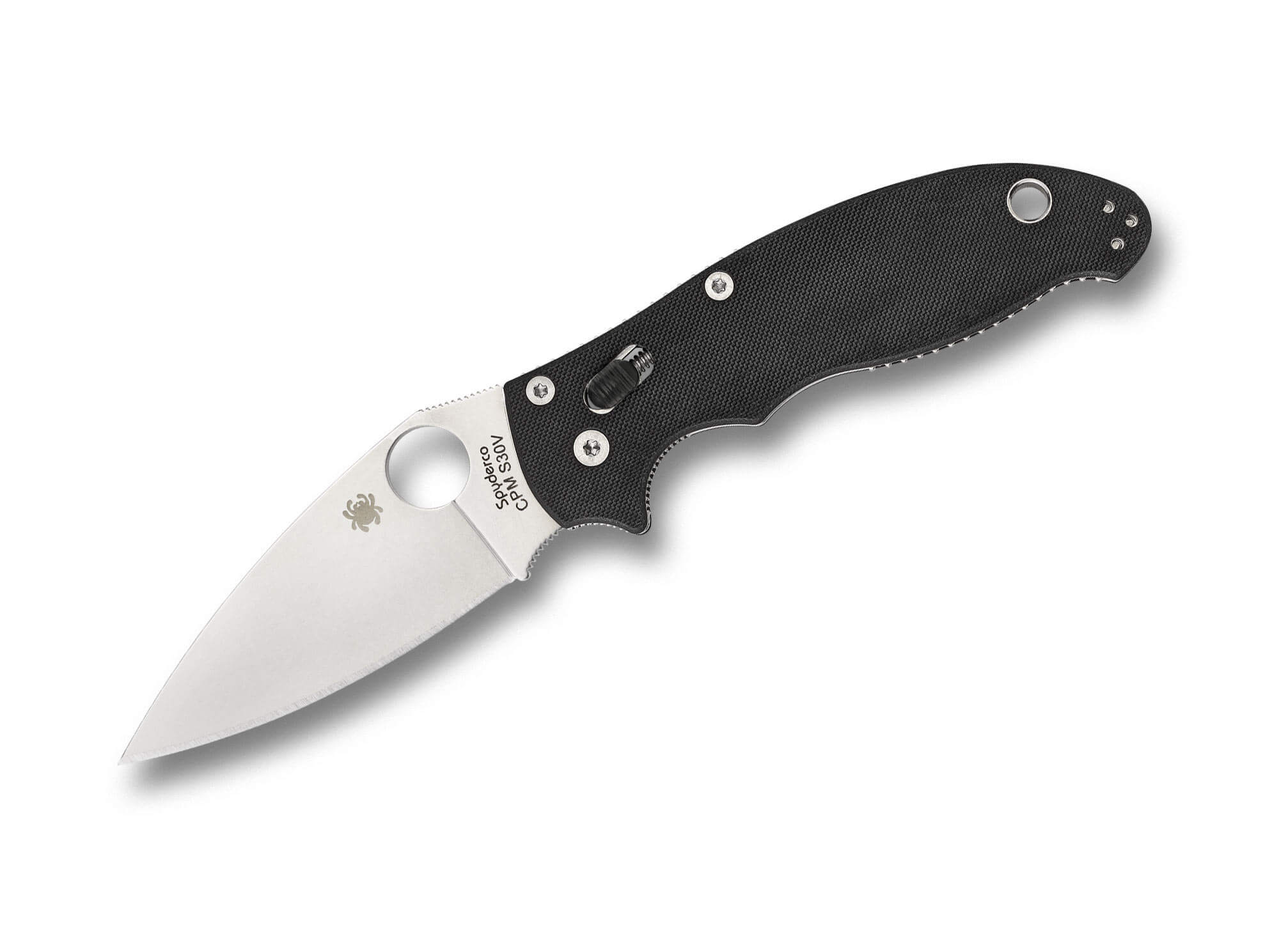

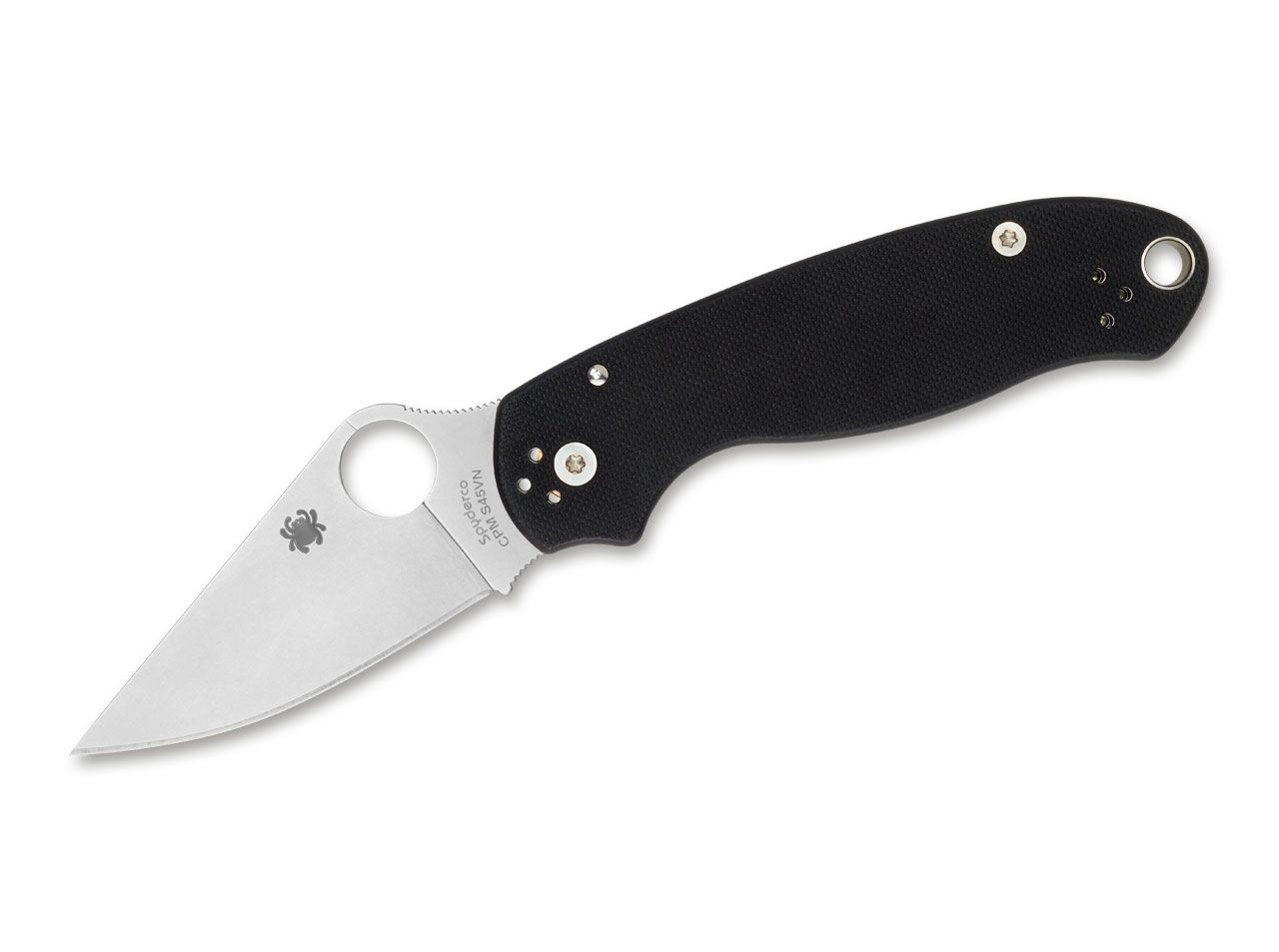
Spyderco Para 3 A faithful companionMost major knife manufacturers have developed their classics over the years, which are simply indispensable from the program. Spyderco's Para Military 2 is one of them, along with several other models. But for some, this folding knife is a bit too big for everyday use, especially since there is a legal regulation in some US states that only allows blades up to a length of 3 inches. Spyderco have therefore put the PM2 on a diet and the result can now be admired in the form of the Para 3. Well, it's not quite that simple - after all, the Para 3 is much more than just a shrunken version of the classic.Despite the significantly smaller dimensions, the Para 3 also feels absolutely fantastic in the hand, especially when you use the finger choil at the base of the blade. This indentation allows one to guide the knife very close to the cutting edge and thus be able to transfer a lot of force to the cutting motion. The Compression Lock, which at first glance looks like a liner lock attached to the back, provides maximum security through its locking technology, which is due to the fact that here (unlike the liner lock) a part of the plate is pushed between the blade root and the stop pin. So to destroy the lock, the vertically positioned liner would have to be crushed between the blade and the pin, which is virtually impossible. The fully raised flat grind of the blade, which is made of CPM S45V steel, ensures optimal cutting performance and the fine tapered tip also allows for the most precise work. The blade length of exactly 3inches (hence the name of the knife) is still long enough to handle the vast majority of everyday cutting tasks with ease, yet still makes for a much more compact overall package compared to the Para Military 2. Together with the large lanyard hole and the reversible poket clip (making the knife perfectly suitable for left-handers), you get a really robust yet handy pocket knife with the Para 3, which proves to be an absolutely faithful companion in everyday life.