
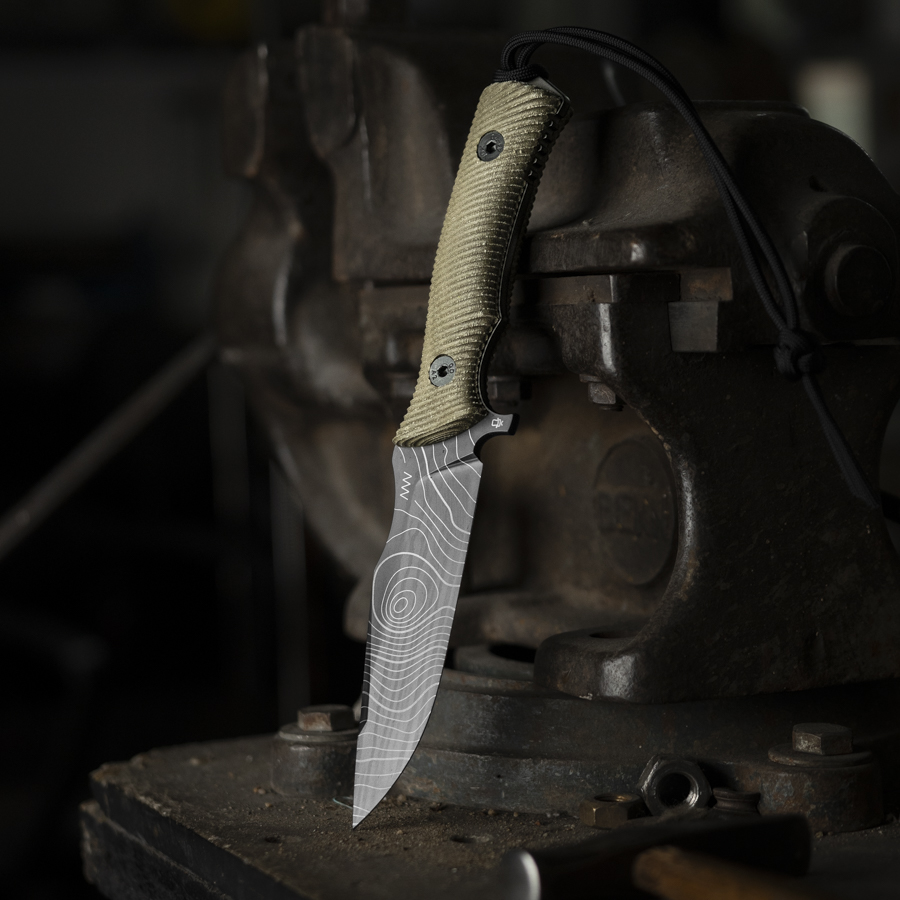
Section 42a of the German Weapons Act regulates the so-called prohibition on carrying certain items – in other words, the ban on carrying specific objects in public. In this context, "carrying" means having a knife readily accessible or within easy reach, for example in a trouser pocket, on a belt, or in a backpack.
The law prohibits carrying:
For everyday knife users, the third point is particularly important: the one-handed locking knife.
"One-handed locking" knives are knives that feature a mechanism for one-handed opening and a blade lock. If a knife has only one of these characteristics, it is not affected by § 42a.
(Source: https://www.boker.de/waffenecht)
A pocket knife that meets both criteria, such as most Swiss Army knives or slipjoints, is also § 42a compliant.
Please note that we have classified the item to the best of our knowledge and belief. This is generally only a guideline for you and not a binding legal advice.
It is possible that a pocket knife we consider § 42a compliant may still fall under the carrying prohibition.
If you're looking for a knife that you can legally carry in public in Germany, keep the following points in mind:
Yes – as long as it is not considered a one-handed locking knife under Section 42a of the German Weapons Act. A traditional folding knife without a thumb stud and without a locking mechanism (a slipjoint) can generally be carried legally in public. Models with a flipper and a liner lock, on the other hand, generally cannot.
A slipjoint does not lock the blade. Instead, a spring keeps the blade in position, but it can still be folded closed with sufficient force. A liner lock (or frame lock) mechanically locks the blade in the open position. Only a slipjoint is generally compliant with Section 42a, provided it also cannot be opened with one hand.
The restriction applies to knives that are readily accessible. A knife stored in a locked case in the trunk is being transported legally and is not considered to be carried. If the knife is within easy reach, such as on the passenger seat or in the center console, it is generally considered to be carried.
Yes. Section 42a prohibits carrying fixed-blade knives with a blade length exceeding 12 cm (4.72"). An 11 cm blade falls below this limit. However, fixed-blade knives may still be subject to other legal considerations. If in doubt, seek professional legal advice.
German law allows the carrying of one-handed locking knives if a legitimate interest exists. Examples include professional use (such as by tradespeople or hunters), traditional cultural activities, or sporting purposes. The reason should be reasonable and, if necessary, verifiable.
All knives marked as "Legal to Carry in Germany" have been reviewed
by us and, to the best of our knowledge and belief, comply with the applicable legal
requirements. Please note that this does not constitute legal advice and individual
cases may differ.
View all knives that are legal to carry in Germany →