













Spartan Blades KA-BAR



€445.00*
Oh NO - I am not in stock right now! 😞
Product number:
SB11.1
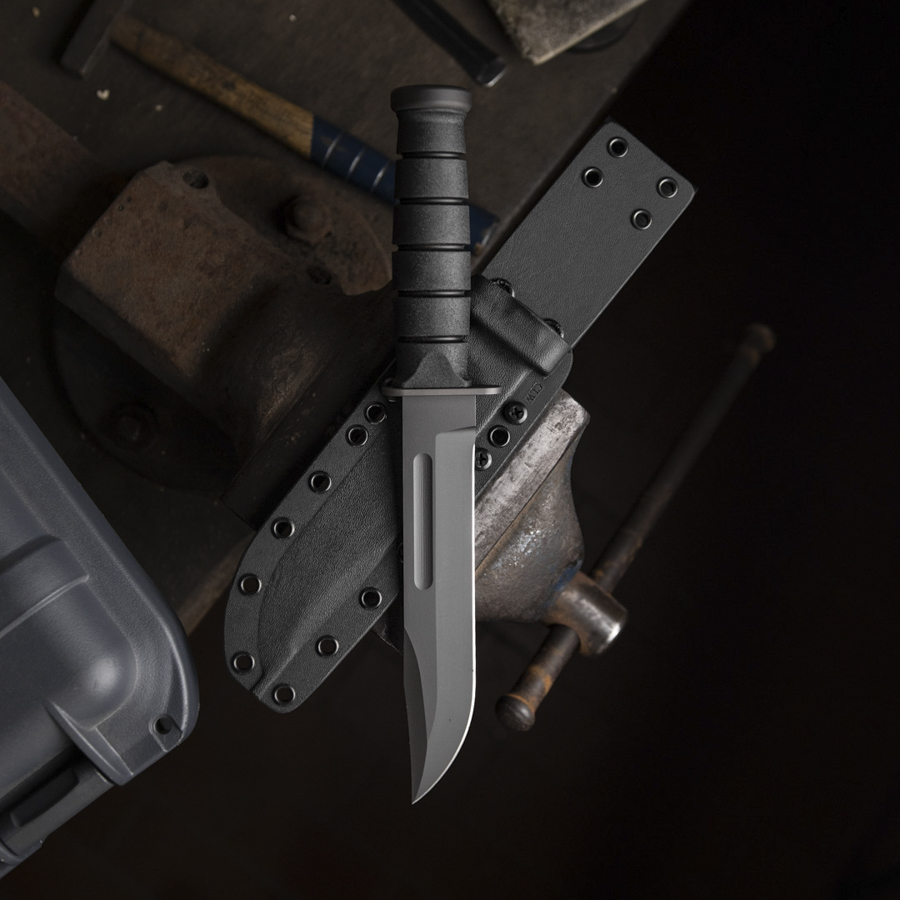
Spartan Blades KA-BAR
- Historic design
- with Magnacut blade
- with Kydex or leather sheath
The story
Let me take you into the world of: Spartan Blades KA-BAR - A tribute to history and at the same time a step into the future.
Featuring a historic design and a Magnacut blade, this knife gives you the choice of a Kydex or leather sheath.
The story begins on December 9, 1942, in the middle of World War II.
KA-BAR submitted a knife to the U.S. Marine Corps, hoping it would gain wide recognition in that military branch.
Working with the Marine Quartermaster Department, the original design was revised and production began on an improved combat and utility knife for the Marines.
As the war wore on, the United States Marine Corps (USMC) KA-BAR knives gained such a reputation for quality and were produced in such quantities that "KA-BAR" became synonymous with this knife design - regardless of whether the knife was actually produced at the KA-BAR factory.
The USMC KA-BAR was valued and used not only by the Marines, but also by the Army, Navy, Coast Guard and Underwater Demolition Teams.
Decades after the end of World War II, the KA-BAR knife remained a preferred choice for soldiers serving in global conflicts around the world.
In 2019, KA-Bar expanded its horizons and mergedwith Spartan Blades, LLC to form Pineland Cutlery, Inc.
Under the leadership of John Stitt, the CEO of KA-Bar and Pineland Cutlery, the desire to create a version of the renowned "KA-BAR" knife that features increased edge retention, ruggedness and corrosion resistance was born.
During the development and research phase, a metallurgist named Dr. Larrin Thomas came across a particle-based metal that offered just the improvements he was looking for. This steel, known as CPM MagnaCut®, was exactly what this new knife needed. So experience a symbiosis of tradition and innovation with the Spartan Blades KA-BAR.
.
Featuring a historic design and a Magnacut blade, this knife gives you the choice of a Kydex or leather sheath.
The story begins on December 9, 1942, in the middle of World War II.
KA-BAR submitted a knife to the U.S. Marine Corps, hoping it would gain wide recognition in that military branch.
Working with the Marine Quartermaster Department, the original design was revised and production began on an improved combat and utility knife for the Marines.
As the war wore on, the United States Marine Corps (USMC) KA-BAR knives gained such a reputation for quality and were produced in such quantities that "KA-BAR" became synonymous with this knife design - regardless of whether the knife was actually produced at the KA-BAR factory.
The USMC KA-BAR was valued and used not only by the Marines, but also by the Army, Navy, Coast Guard and Underwater Demolition Teams.
Decades after the end of World War II, the KA-BAR knife remained a preferred choice for soldiers serving in global conflicts around the world.
In 2019, KA-Bar expanded its horizons and mergedwith Spartan Blades, LLC to form Pineland Cutlery, Inc.
Under the leadership of John Stitt, the CEO of KA-Bar and Pineland Cutlery, the desire to create a version of the renowned "KA-BAR" knife that features increased edge retention, ruggedness and corrosion resistance was born.
During the development and research phase, a metallurgist named Dr. Larrin Thomas came across a particle-based metal that offered just the improvements he was looking for. This steel, known as CPM MagnaCut®, was exactly what this new knife needed. So experience a symbiosis of tradition and innovation with the Spartan Blades KA-BAR.
| Blade length: | 17,8 |
|---|---|
| Blade material: | CPM Magnacut |
| Blade thickness: | 4 |
| Handle Material: | Craton |
| Lefthand suitable: | Yes |
| Made in: | USA |
| Overall Length: | 30,5 |
| Sheath: | Kydex, Leather |
Login
No reviews found. Share your insights with others.
Warn-/Sicherheitshinweis:
Schnittverletzungen: Die häufigste Gefahr bei der Verwendung von Messern ist das Risiko von Schnittverletzungen.
Scharfe Klingen können schnell durch Haut und Gewebe dringen. Abrutschen des Messers: Ein unsachgemäßes oder zu starkes Drücken kann dazu führen, dass das Messer abrutscht und unkontrollierte Bewegungen entstehen, die Verletzungen verursachen können. Verletzungen durch
Stürze: Messer sollten niemals ungesichert oder in der Nähe von Tischkanten abgelegt werden, um zu verhindern, dass sie herunterfallen und jemanden verletzen.
Stumpfe Messer: Stumpfe Messer stellen ein größeres Verletzungsrisiko dar, da sie mehr Kraft erfordern und leichter abrutschen können. Messer sollten daher regelmäßig sachgemäß nachgeschärft werden.
Nicht bestimmungsgemäße Nutzung: Das Verwenden eines Messers für Aufgaben, für die es nicht vorgesehen ist (z.B. als Hebelwerkzeug), kann nicht nur die Klinge beschädigen, sondern auch zu Unfällen führen.