€74.00*
Oh NO - I am not in stock right now! 😞
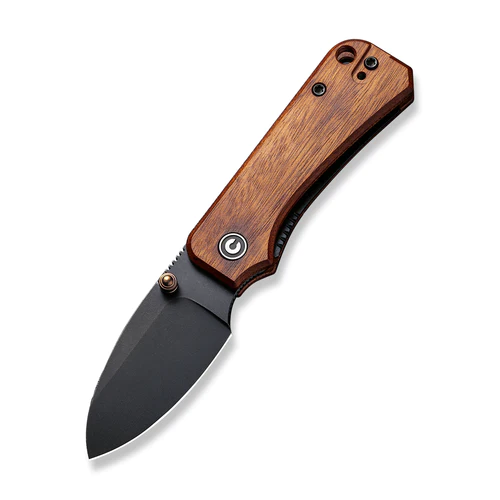
Civivi Baby Banter Cuibourtia Wood
- Ben Petersen Design
- Cuibourtia wood handle scales
- Drop Point blade
- Black Stonewashed blade finish
- NitroV steel
The Banter from WE Knife has quickly established itself as one of the best EDC pocket knives around. No wonder: this Ben Peterson design (Knafs, ex-Blade HQ) is so handy and functional that it simply works well in everyday life.
The Baby Banter is not only slightly smaller, but also uses a different steel. But first things first: there's the slightly different handle, which offers enough room for all 4 fingers thanks to a small finger recess at the base of the blade. Thanks to the universal shape, the Baby Banter is perfectly suitable for small to medium-sized hands. Only with very large hands you might better reach for the WE Knife Banter. Thanks to the finger choil, you can reach very close to the cutting edge and thus put a lot of force into the cutting movement (for example, when carving).
The blade steel used here is Nitro-V stainless steel, which has been given a blackwash finish. This nitrogen-alloyed steel is very resistant and offers versatile possibilities in use. Should the cutting edge ever become blunt, it can be quickly resharpened. A smooth blade action is provided by the built-in ball bearings, so that the Baby Banter also has a certain amount of fun. The whole thing is rounded off by a convertible deep-carry pocket clip that allows your Baby Banter to disappear discreetly in your pocket.
| Blade length: | 5,9 |
|---|---|
| Blade material: | Nitro-V-Steel |
| Blade runs on: | Bearings |
| Blade thickness: | 2,3 |
| Designer: | Ben Petersen |
| Handle Material: | Wood |
| Knife type: | Every Day Carry |
| Lefthand suitable: | Yes |
| Legal to carry in Germany: | No |
| Locking Mechanism: | Nested Liner Lock |
| Made in: | China |
| Opening: | Thumbstud |
| Overall Length: | 13,9 |
| Weight: | 56 |
Login
Warning / Safety Notice:
Risk of cuts: The most common hazard when using knives is the risk of cuts. Sharp blades can easily penetrate skin and tissue.
Blade slippage: Improper handling or applying excessive force may cause the knife to slip, leading to uncontrolled movements and potential injury.
Injuries from falling knives: Knives should never be left unsecured or placed near the edge of tables or work surfaces, as they may fall and cause injury.
Dull blades: Dull knives pose a higher risk of injury, as they require more force and are more likely to slip. Knives should therefore be sharpened regularly and properly.
Improper use: Using a knife for purposes other than its intended use (e.g. as a prying tool) can damage the blade and may result in accidents.