

















Anso Sheepfoot



€365.00*
Oh NO - I am not in stock right now! 😞
Product number:
SF.3
Anso Sheepsfoot - a masterpiece of tradition and craftsmanship
The story:
The design and knife originated during Jen's studies (industrial design) during the 1990s.His iconic design, by the way, laid the foundation for his career as a knifemaker and designer.
A feature in Tactical Knives magazine, coinciding with his final exams, catapulted the Anso Sheepsfoot to success.
At the time, the still very young knifemaker received more than 100 orders. These, in turn, helped him secure credit for his home.
In this house Jens still lives with his family today.
Today, the Sheepfoot celebrates its 25th anniversary and appears in this new revised version.
The knife
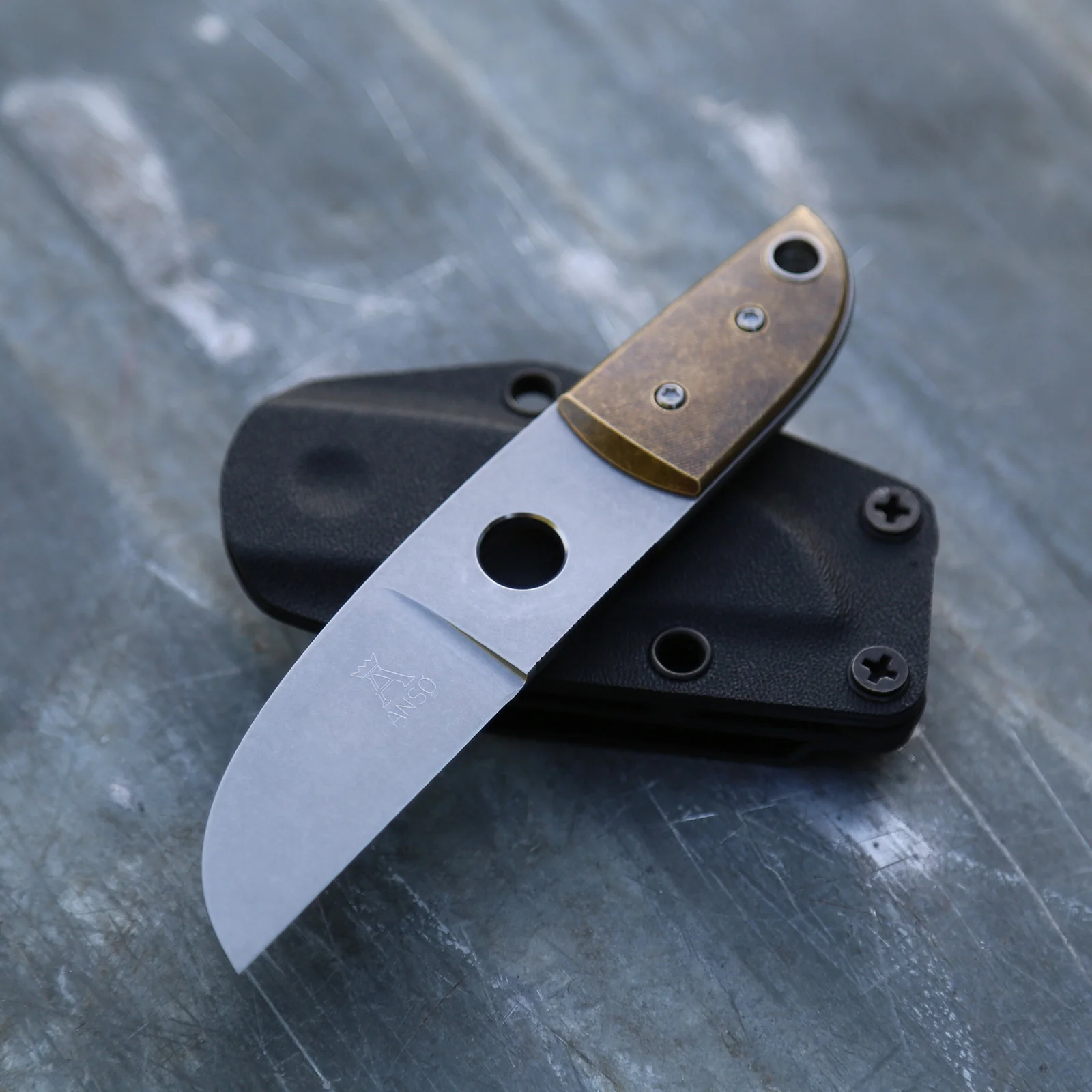
The Anso Sheepsfoot is a versatile little pocket fixed.The Sheepsfoot blade, cuts effortlessly through boxes. It is also suitable for doing fine carving work.
The rear end of the handle is fitted with shells that are securely fastened with titanium screws. The integrated lanyard socket is also made of titanium.
Ahead of the handle scales, there is a section of bright steel with an opening for the thumb and index finger. Just behind the edge, you'll findjimpings that ensure a secure grip. With an overall length of 13.5 and a 5 cm short blade, the Anso Sheepsfoot is ready for a variety of cutting tasks.
Made by Jens Anso in his workshop in Denmark.
| Blade length: | 5,0 |
|---|---|
| Blade material: | RWL 34 |
| Designer: | Jens Anso |
| Legal to carry in Germany: | Yes |
| Made in: | Denmark |
| Overall Length: | 13,5 |
| Sheath: | Gürteladapter, Kydex |
Login
No reviews found. Share your insights with others.
Warn-/Sicherheitshinweis:
Schnittverletzungen: Die häufigste Gefahr bei der Verwendung von Messern ist das Risiko von Schnittverletzungen.
Scharfe Klingen können schnell durch Haut und Gewebe dringen. Abrutschen des Messers: Ein unsachgemäßes oder zu starkes Drücken kann dazu führen, dass das Messer abrutscht und unkontrollierte Bewegungen entstehen, die Verletzungen verursachen können. Verletzungen durch
Stürze: Messer sollten niemals ungesichert oder in der Nähe von Tischkanten abgelegt werden, um zu verhindern, dass sie herunterfallen und jemanden verletzen.
Stumpfe Messer: Stumpfe Messer stellen ein größeres Verletzungsrisiko dar, da sie mehr Kraft erfordern und leichter abrutschen können. Messer sollten daher regelmäßig sachgemäß nachgeschärft werden.
Nicht bestimmungsgemäße Nutzung: Das Verwenden eines Messers für Aufgaben, für die es nicht vorgesehen ist (z.B. als Hebelwerkzeug), kann nicht nur die Klinge beschädigen, sondern auch zu Unfällen führen.
Information on the manufacturer (information obligations under the GPSR Product Safety Regulation)
Anso of Denmark (Jens Anso)
Skanderborgvej 116
8472 Sporup, Denmark